AI is changing how people discover information online. Traditional search rankings still matter, but users now interact with AI Overviews, AI Mode, ChatGPT, Gemini, Perplexity, and other AI-powered search experiences. This shift has created a growing need for reliable AI search rank tracking tools that can measure visibility beyond the traditional blue links.
These tools help businesses, SEO professionals, agencies, publishers, and freelancers understand how their brands and content appear across AI-powered search results. Instead of checking rankings manually, marketers can automate monitoring, identify competitors, analyze citations, and discover content opportunities. This improves productivity, efficiency, creativity, and decision-making while reducing repetitive SEO work.
The best platforms combine traditional SEO data with AI visibility insights. They help answer an important question: Is your brand being discovered, mentioned, or cited when people ask AI-powered search engines questions related to your business?
What Are AI Search Rank Tracking Tools?
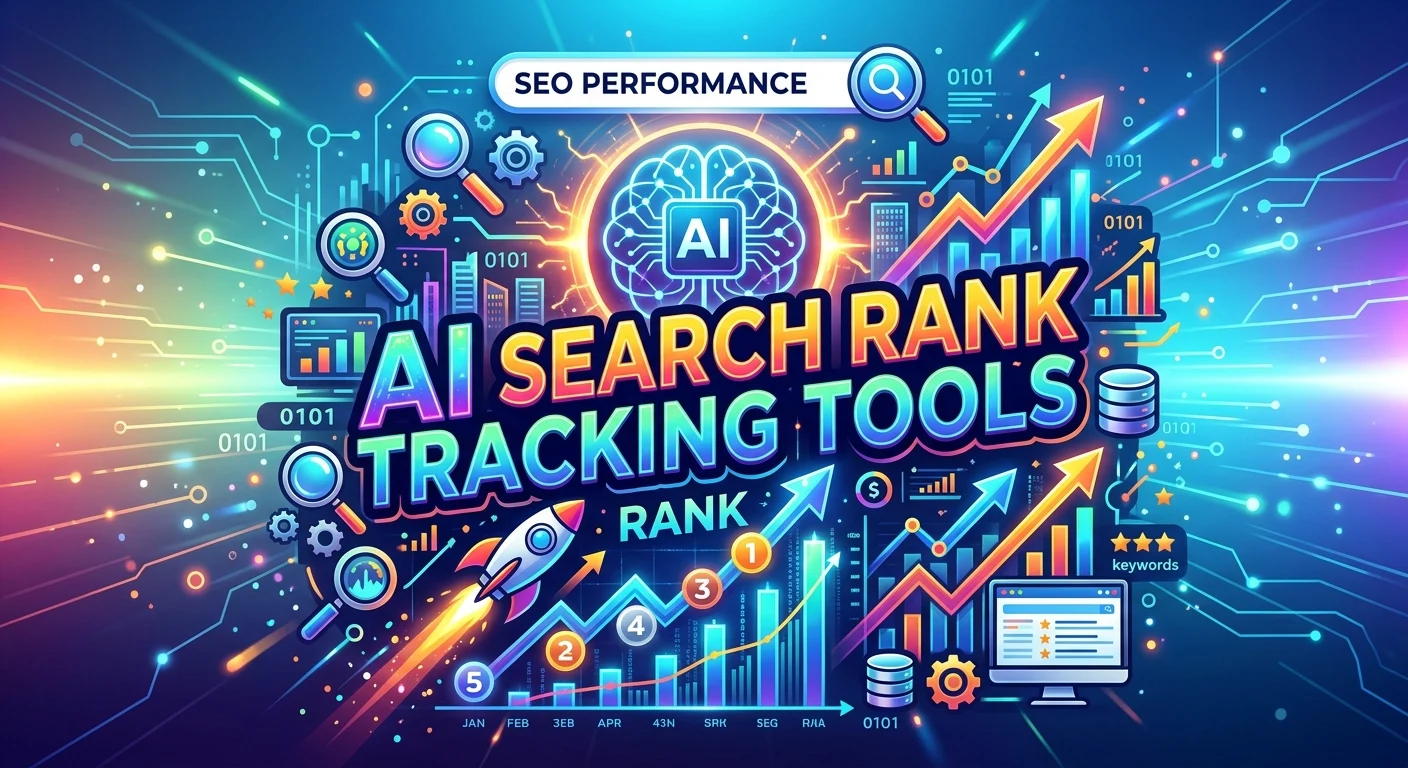
AI search rank tracking tools are SEO platforms that monitor a website, brand, or content across AI-powered search experiences. They can track visibility in AI-generated answers, citations, mentions, traditional search results, and other search features.
Traditional rank trackers usually focus on keyword positions. For example, they may tell you that your page ranks at position four for a specific keyword. AI search tracking goes further by examining whether your website becomes a source or recommendation within an AI-generated response.
This distinction is important because AI search does not always work like traditional search. An AI system may generate an answer using information from multiple websites. A brand may therefore gain visibility through a citation or mention without receiving a conventional number-one ranking.
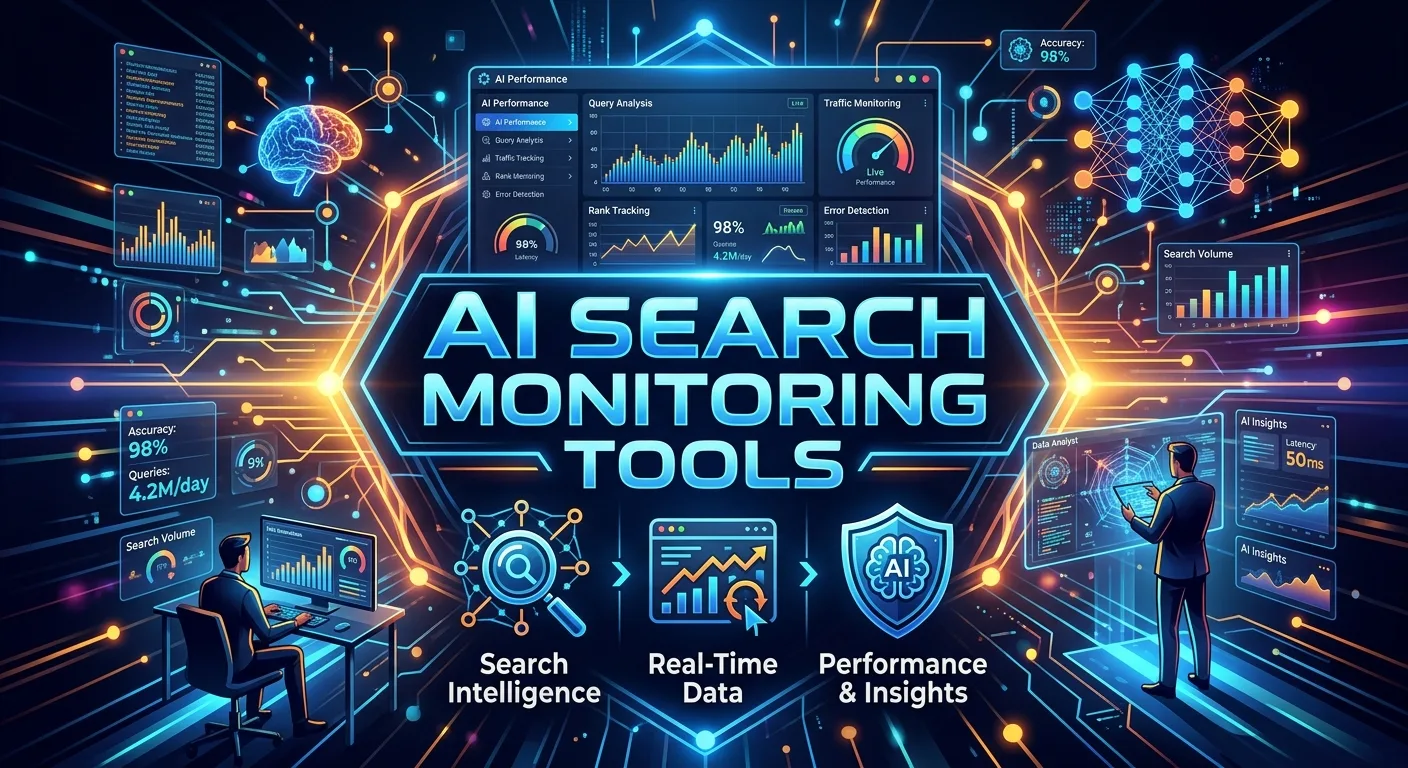
Modern AI search tracking platforms can monitor metrics such as AI mentions, citations, linked URLs, brand visibility, competitors, prompts, keywords, and visibility trends. Some also combine these insights with traditional SEO rankings.
For example, an SEO professional could track the question “best AI SEO tools for small businesses” and discover that competitors frequently appear in AI-generated responses while their own website does not. That information can guide future content optimization.
How Do AI Search Rank Tracking Tools Work?
AI search tracking begins with a set of keywords, questions, prompts, topics, or brand-related searches. The tracking platform repeatedly analyzes these queries across selected search environments.
The system may record whether an AI-generated response appears, which brands or domains are mentioned, which URLs receive citations, and how competitors perform. Some platforms also monitor the wording of the generated response and identify changes over time.
For example, imagine an agency tracks 100 prompts related to digital marketing. On Monday, its website appears in 12 AI responses. Several weeks later, it appears in 21. The agency can use this change as one indicator of growing AI search visibility.
Many tools also collect historical data. Historical tracking matters because AI-generated answers can change. A single manual search only provides a snapshot. Repeated monitoring creates a trend that is much more useful for SEO analysis.
A typical workflow looks like this:
Create target queries → monitor AI results → collect mentions and citations → compare competitors → identify gaps → improve content → track changes.
This automated process saves time and makes AI search optimization more systematic.
Key Features of AI Search Rank Tracking Software
A strong AI search rank tracker should provide more than a basic visibility score. It should give you enough information to understand why your visibility changed and where opportunities exist.
One important feature is prompt tracking. AI search often responds to complete questions rather than short keywords. Tracking natural-language prompts can therefore provide a more realistic picture of how people use AI search.
Another valuable feature is citation monitoring. A citation can show that an AI system used a particular webpage as a source. Tracking cited URLs helps SEO teams identify which pages generate AI visibility.
Competitor monitoring is also useful. You can discover which competing brands appear for your target topics and which queries consistently produce competitor mentions.
Other useful features include:
- AI Overview tracking
- AI Mode monitoring
- Brand mention tracking
- Citation tracking
- Competitor analysis
- Prompt-level tracking
- Keyword tracking
- Historical visibility
- Geographic tracking
- URL-level reporting
- Scheduled reports
- Data exports
- API access
- Search Console integration
- Analytics integrations
The best feature set depends on your SEO goals. A freelancer managing one website may need a simple dashboard, while an agency may require automation, reporting, large keyword limits, and API access.
Why AI Search Rank Tracking Matters for SEO
Search visibility is becoming more complicated. A website can rank well in traditional search while receiving limited visibility in AI-generated answers.
This creates a new measurement challenge for SEO teams. Instead of asking only, “Where do we rank?” marketers increasingly need to ask, “How does our brand appear when users ask AI-powered search systems about our topic?”
Google’s Search Console documentation now includes generative AI performance reporting covering AI Overviews and AI Mode. Google says the report can provide information about impressions from these experiences, including pages, devices, countries, and search appearance data.
AI search tracking can therefore complement traditional SEO metrics. You can compare organic rankings with AI visibility and identify situations where the two behave differently.
For example, a page might rank in the top five for a valuable keyword but receive no AI citations. That could indicate an opportunity to improve the page’s clarity, topical depth, evidence, or ability to directly answer the user’s question.
The objective should not be to chase every AI feature. Instead, use tracking data to understand where your audience searches and how your content is represented there.
Important Metrics to Monitor in AI Search
One of the most useful metrics is AI visibility. It represents how frequently your brand or website appears across tracked AI queries. However, the exact calculation differs between tools, so always check how a platform defines its score.
AI mentions measure how often your brand appears in generated answers. A mention can provide useful visibility even when the response does not include a clickable link.
Citations are another important signal. A cited URL indicates that an AI-generated response references a particular webpage as supporting information.
You should also monitor share of voice when the platform provides it. This can help compare your visibility with competitors across a defined set of prompts.
Other useful measurements include:
- Number of tracked AI prompts
- AI Overview appearances
- Citation frequency
- Mention frequency
- Cited URLs
- Competitor mentions
- Brand position within responses
- Visibility changes over time
- Organic keyword rankings
- Search impressions
- Search clicks
- Conversions
Avoid treating any single metric as a complete representation of business performance. AI visibility should be connected with traditional SEO and business data whenever possible.
Benefits and Use Cases of AI Search Rank Tracking
The biggest benefit is automation. Instead of manually checking hundreds of questions across different search environments, a tracking platform can monitor them systematically.
For SEO agencies, this can improve client reporting. An agency can show clients how their brand appears in AI-generated search results alongside traditional ranking data.
For freelancers, AI search monitoring can become an additional SEO service. A freelancer might create a monthly report showing important prompts, brand mentions, citations, competitor visibility, and content opportunities.
For content teams, the tools can reveal topics where competitors consistently receive AI citations. This can inspire research without encouraging simple copying.
For ecommerce companies, AI tracking can help monitor product discovery and category-related questions. For example, a company selling software could monitor prompts such as “best project management tools for remote teams.”
Publishers can monitor informational queries related to their content categories. SaaS businesses can track product comparisons, alternatives, and problem-solving questions.
In each case, the value comes from turning data into action:
Monitor → analyze → improve → measure again.
This creates a continuous optimization cycle.
Free vs Paid AI Search Rank Tracking Tools
Free tools can be useful when you are learning AI SEO or managing a small website. They may provide limited tracking, basic visibility reports, or access to first-party search data.
Google Search Console is particularly valuable because it provides information directly from Google’s search ecosystem. Its generative AI performance reporting can help eligible websites understand visibility from AI Overviews and AI Mode.
However, free tools often have limitations around keyword volume, competitor monitoring, historical data, locations, automation, and reporting.
Paid platforms typically provide broader tracking capabilities. Depending on the provider, paid plans may include larger prompt limits, competitor research, historical trends, scheduled reporting, API access, and monitoring across multiple AI platforms.
Before choosing a paid product, calculate its practical value. Ask whether it saves enough time or provides enough useful insight to justify the subscription.
For a small website, starting with free resources and a limited keyword set can make sense. Larger teams may benefit from more advanced monitoring and automation.
Do not choose a platform simply because it advertises a large number of tracked prompts. Focus on the data quality and usefulness of the insights.
Pricing and Value of AI Search Rank Tracking Tools
AI search tracking pricing varies widely. Some platforms include AI visibility features within broader SEO subscriptions. Others offer separate AI visibility products or modules.
When evaluating pricing, consider more than the monthly fee.
Check how many prompts or keywords you can track, how frequently results update, how many competitors you can monitor, and how much historical data the platform stores.
Also check geographic coverage. A business targeting the United States may have different requirements from a company targeting Pakistan, the United Kingdom, Europe, or multiple international markets.
Reporting capabilities can also influence value. Agencies may need white-label reports, automated scheduling, client workspaces, and exports.
API access becomes important for larger teams that want to combine AI search data with internal dashboards.
A useful evaluation formula is:
Tool value = useful insights + time saved + better decisions − subscription cost.
Trial periods can help you test whether the platform produces actionable information before committing to a longer subscription.
Because software pricing and feature limits change frequently, verify current pricing directly with each provider before purchasing.
AI Search Tracking Integrations and SEO Workflows
Integrations make AI search tracking more powerful. Instead of viewing AI visibility as a separate report, you can combine it with other SEO and marketing information.
Google Search Console can provide first-party information about search performance. Google Analytics can help connect traffic with user behavior and conversions.
SEO platforms can add keyword rankings, backlinks, technical audits, competitor data, and content information. Combining these datasets can reveal patterns that are difficult to see from a single metric.
For example, suppose an article ranks well organically but receives few AI citations. Your team could compare its structure with highly cited competitor pages, identify missing information, improve the article, and then monitor the result.
A practical workflow is:
Keyword research → content creation → traditional rank tracking → AI visibility monitoring → content optimization → analytics measurement.
Automation can make this workflow even more efficient. Scheduled reports can send regular visibility updates to SEO teams without requiring manual data collection.
For agencies, this approach can reduce repetitive work while improving the depth of client reporting.
AI Search Rank Tracking vs Traditional Rank Tracking
Traditional rank tracking measures where a webpage appears in search results for a particular keyword.
AI search tracking measures how a brand, domain, or URL appears within AI-generated search experiences.
These measurements overlap but should not be treated as identical.
For example, a page could rank at position two organically but never appear as a source in an AI-generated response. Another website could rank lower organically while receiving an AI citation for a specific question.
This happens because AI systems evaluate and synthesize information differently from a conventional ranking page.
Traditional rank tracking remains valuable for measuring organic performance. AI tracking adds another layer that reflects the changing search environment.
The strongest SEO workflow therefore combines both:
Organic rankings + AI visibility + citations + traffic + conversions.
Google also distinguishes between AI Overviews and AI Mode. AI Overviews appear as part of Google Search results, while AI Mode provides a more conversational search experience. Google’s current Search Console documentation reports generative AI performance across both experiences.
This broader approach gives SEO teams a more complete understanding of search visibility.
How to Choose the Best AI Search Rank Tracking Tool
Start by defining what you actually want to measure.
If your main goal is monitoring Google AI Overviews, choose a tool with strong AI Overview tracking. If you want to monitor brand visibility across several AI systems, look for broader AI search coverage.
Check whether the platform tracks keywords, prompts, mentions, citations, URLs, competitors, locations, and historical changes.
Data frequency also matters. Some platforms update frequently, while others use less frequent sampling. The right frequency depends on how quickly your business needs to react.
Review the reporting interface before buying. A tool may collect extensive data but still be difficult to interpret.
Also examine:
- Keyword or prompt limits
- AI platform coverage
- Search engine coverage
- Location options
- Competitor limits
- Historical data
- Citation details
- API access
- Export options
- Scheduled reports
- Team features
- Integrations
- Customer support
Do not select a tool based only on its marketing claims. Test a representative set of your own keywords and prompts.
The best platform is the one that produces reliable information you can actually use.
Best Practices for Improving AI Search Visibility
Tracking tells you what is happening. Your content strategy determines what you do about it.
Start by creating content that directly answers the questions your audience asks. Use clear headings, concise explanations, useful examples, and supporting evidence.
Strong topical coverage also matters. Instead of writing one shallow article about a subject, create related content that answers different stages of the user’s journey.
Use first-hand experience, original research, expert insights, statistics, examples, and credible references where appropriate. These elements can make content more useful and demonstrate expertise.
Keep important information updated. AI search systems operate in a rapidly changing environment, and outdated information can reduce the usefulness of a page.
Internal linking can also help search engines understand relationships between related pages. Create logical connections between cornerstone pages and supporting articles.
Most importantly, write for people first.
Avoid producing pages simply because an AI tracking tool identifies a keyword gap. A keyword opportunity is useful only when it matches real user intent and can support meaningful content.
Common AI Search Tracking Mistakes
One major mistake is relying only on a single AI visibility score. Different platforms can calculate visibility differently, so scores from two tools may not be directly comparable.
Another mistake is monitoring too many irrelevant prompts. A huge dataset can create noise. Focus first on searches that matter to your audience, products, services, and business goals.
Some marketers also check AI results manually once and treat that observation as permanent. AI-generated responses can change, so historical tracking provides more useful evidence.
Another problem is confusing mentions with traffic. A brand can appear in an AI answer without receiving a click. AI visibility should therefore be connected with actual business outcomes whenever possible.
Avoid copying competitors just because their content receives citations. Instead, study what useful information they provide and identify genuine gaps.
Finally, do not abandon traditional SEO. Organic rankings, technical health, backlinks, search demand, clicks, and conversions remain important.
AI search optimization should expand your SEO strategy, not replace its foundations.
Latest AI Search Rank Tracking Trends for 2026 and Beyond
AI search tracking is moving toward a broader concept of search visibility intelligence.
Platforms are increasingly combining conventional rankings with AI Overviews, AI Mode, conversational search, brand mentions, citations, and other AI search signals.
Prompt tracking is another major development. Users often ask AI systems complete questions instead of entering short keyword phrases. Tracking those questions can provide more realistic insight into AI search behavior.
Competitor monitoring is also becoming more detailed. Instead of simply asking which competitor ranks higher, marketers can investigate which brands appear most frequently in AI-generated answers.
Google is also expanding its own measurement capabilities. Google’s current documentation describes a generative AI performance report that includes AI Overviews and AI Mode, giving website owners additional first-party visibility information.
The future of AI search tracking will likely focus on visibility across multiple search environments, rather than one traditional ranking position.
This could include:
- AI search citations
- Brand mentions
- AI-generated recommendations
- Traditional organic rankings
- Search impressions
- User engagement
- Conversion signals
- Competitive visibility
- Topic-level authority
The key trend is the movement from rank tracking to visibility tracking.
Frequently Asked Questions About AI Search Rank Tracking Tools
What are AI search rank tracking tools?
AI search rank tracking tools monitor how websites, brands, and pages appear across AI-powered search experiences. They can track mentions, citations, prompts, competitors, and visibility trends.
Why are AI search tracking tools important?
They help SEO professionals understand visibility in AI-generated search experiences that traditional rank trackers may not fully measure.
Can AI search tools track Google AI Overviews?
Yes. Many specialized SEO platforms now provide AI Overview monitoring, although features and coverage vary by provider.
Can Google Search Console track AI search performance?
Yes. Google’s current documentation describes generative AI performance reporting for AI Overviews and AI Mode.
Are free AI search rank tracking tools available?
Yes. Some platforms offer limited free features, while Google Search Console provides first-party search performance information. Free options generally have fewer monitoring and reporting capabilities.
What is the difference between AI mentions and AI citations?
An AI mention means your brand may be named in a generated response. A citation generally points users toward a particular source or webpage. The exact terminology can vary between platforms.
Should I use AI rank tracking alongside traditional SEO tools?
Yes. AI tracking and traditional rank tracking measure different aspects of search visibility. Using both provides a broader picture.
How often should I track AI search rankings?
Important commercial queries should be monitored regularly. Daily tracking can reveal changes quickly, while weekly or monthly analysis can make long-term trends easier to understand.
Can AI search tracking improve website rankings automatically?
No. Tracking tools provide information. Your SEO team still needs to interpret the data and improve content, technical SEO, internal linking, authority, and user experience.
What should I track first?
Start with your most valuable keywords and natural-language questions. Focus on searches connected to your products, services, audience, and revenue goals.
Conclusion
AI search rank tracking tools are becoming an important part of modern SEO. Search visibility now extends beyond traditional organic positions, with AI Overviews, AI Mode, conversational search, citations, and brand mentions creating new ways for users to discover information.
The most useful tracking strategy combines AI visibility with traditional SEO data. Monitor important prompts, study citations, compare competitors, and connect visibility changes with Search Console, analytics, traffic, and conversions.
Choose tools based on data quality, relevant coverage, useful reporting, automation, integrations, and practical value rather than marketing claims alone.
Most importantly, use AI search data to improve the quality of your website. Create clear answers, cover topics comprehensively, demonstrate real expertise, keep information updated, and provide genuine value to readers.
As AI-powered search continues to evolve through 2026 and beyond, the definition of SEO visibility will continue to expand. Businesses that monitor both traditional rankings and AI search presence can build a more complete understanding of how their content is discovered, referenced, and presented across the modern search ecosystem.