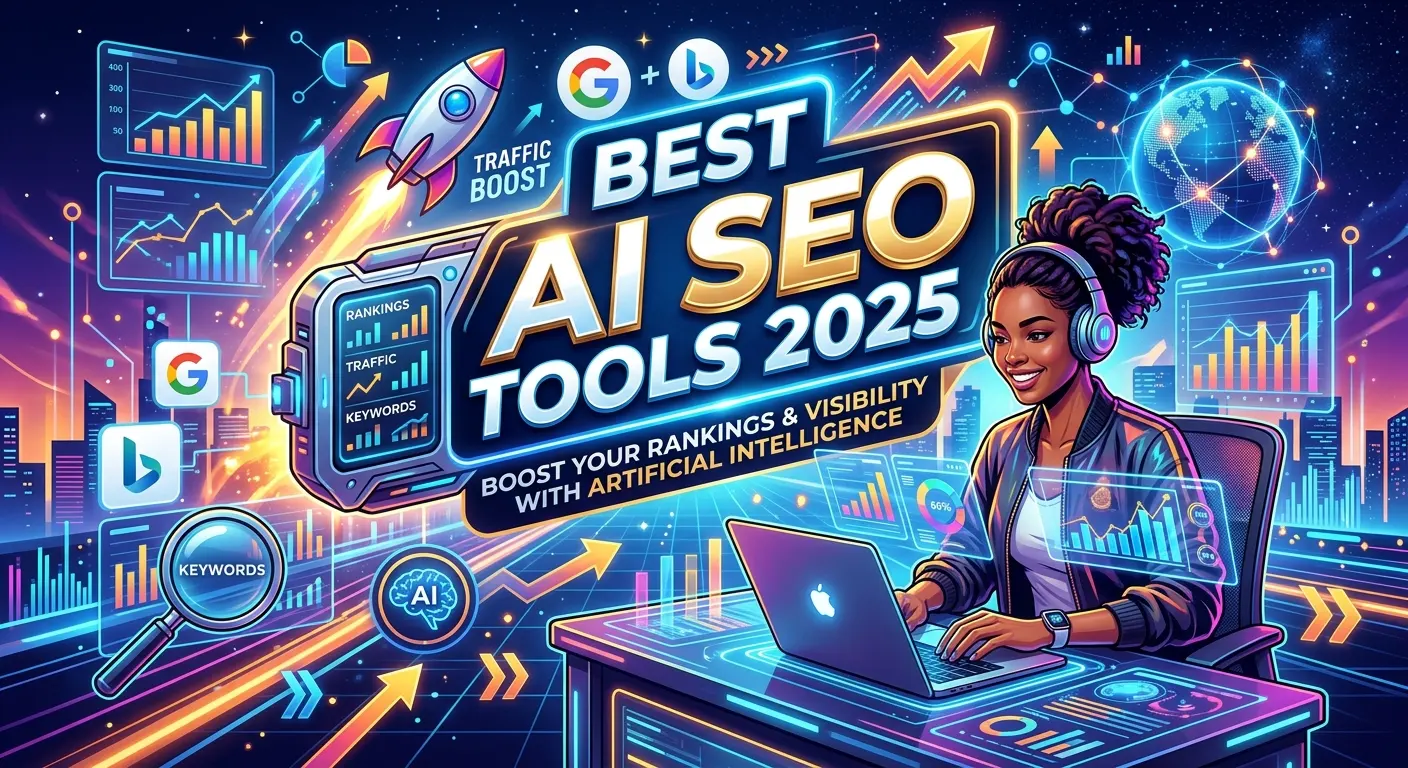
AI has changed how marketers research keywords, create content, analyze competitors, and improve search visibility. The best AI SEO tools 2025 can reduce repetitive work while helping writers and SEO professionals make more informed decisions. Instead of spending hours collecting keywords or manually comparing competing pages, you can use AI-assisted workflows to speed up research, content planning, optimization, and reporting.
However, AI does not replace good SEO judgment. Google continues to emphasize helpful, reliable, people-first content, and its guidance for AI search experiences says that established SEO fundamentals still matter.
The most useful tools combine automation with real SEO data. They can help you identify search intent, discover content gaps, improve on-page optimization, monitor rankings, analyze backlinks, and understand visibility across newer AI search experiences. This guide explains how AI SEO tools work, what features matter, how to choose between free and paid options, and how to use them effectively in 2026 and beyond.
What Are the Best AI SEO Tools 2025?
The best AI SEO tools are software platforms that combine artificial intelligence with SEO data and workflows. Depending on the platform, they can assist with keyword research, content optimization, technical SEO, competitor analysis, rank tracking, backlink research, and AI-search visibility.
Some tools focus mainly on content. Others provide a complete SEO platform. For example, Semrush currently combines keyword research, competitor analysis, technical auditing, rank tracking, content workflows, and AI visibility features.
Ahrefs also combines traditional SEO capabilities with AI features. Its current AI Content Helper analyzes search intent and compares topical coverage against competing pages, while its wider platform includes rank tracking, Site Audit, keyword research, backlink analysis, and content research.
The important point is that an AI SEO tool should support your strategy rather than make every SEO decision automatically. Strong results still depend on understanding your audience, search intent, website quality, and business goals.
How AI SEO Tools Work for Search Optimization
AI SEO tools generally collect information from search results, keyword databases, website crawls, content analysis, and other SEO signals. Machine-learning models can then process large amounts of information and turn it into recommendations that are easier to act on.
For example, an AI content optimization tool may analyze pages ranking for a keyword and identify common topics, missing concepts, headings, questions, or entities. Ahrefs describes its AI Content Helper as focusing on topic coverage rather than keyword stuffing, using competing pages to identify areas where content could be improved.
A typical workflow looks like this:
Keyword research → search-intent analysis → content planning → writing → optimization → technical checks → ranking monitoring → content updates.
Modern platforms increasingly add AI-search analysis to this workflow. Semrush, for example, currently offers AI visibility features designed to track brand appearances in systems such as ChatGPT, Gemini, Perplexity, Claude, and Google AI experiences.
Key Features to Look for in an AI SEO Tool
Before choosing a platform, identify the SEO tasks you actually need to solve. A tool with dozens of features may not be useful if it lacks the specific data you require.
Keyword research remains one of the most important capabilities. Look for search-volume estimates, keyword difficulty, related terms, search intent, competitor rankings, and long-tail keyword discovery.
Content optimization is another major feature. Good tools can help identify missing topics, improve headings, analyze competing content, and create optimization recommendations. Ahrefs’ current AI Content Helper, for example, grades topic coverage against top-ranking pages and provides suggestions for improving content depth.
Other useful features include:
- Technical SEO audits
- Rank tracking
- Backlink analysis
- Competitor research
- Content briefs
- Internal-link recommendations
- SERP analysis
- AI-search visibility monitoring
- SEO reporting
- Google Search Console integration
Choose features based on your workflow rather than buying a platform simply because it advertises the largest feature list.
Best AI SEO Tools for Keyword Research and Search Intent
Keyword research helps you discover what your audience searches for and how competitive those searches may be. AI can make this process faster by generating related concepts, grouping keywords, and identifying different search intents.
For example, the keyword “best AI SEO tools” may have informational and commercial intent. A person could be researching the category, while another person could be comparing software before purchasing a subscription.
Modern AI systems can help organize keywords around intent instead of treating every keyword as an isolated phrase. Ahrefs currently offers AI-powered keyword suggestions and AI search-intent features, including intent analysis and keyword generation across many languages.
A practical workflow is:
- Start with one broad seed keyword.
- Generate related topics and long-tail variations.
- Group keywords by search intent.
- Examine the current SERP.
- Select keywords that match your website’s authority and audience.
- Build content around topics instead of repeating the exact keyword.
This approach creates a stronger topical structure and reduces the temptation to stuff keywords unnaturally into articles.
AI SEO Tools for Content Writing and Optimization
AI-powered content tools can help with outlines, topic research, content briefs, editing, readability, and on-page optimization. They can also help identify content gaps that might be difficult to find manually.
The important distinction is between using AI as an assistant and publishing large quantities of unchecked AI-generated text. Google says its systems prioritize helpful, reliable, people-first content and warns against creating content primarily to manipulate search rankings.
A good workflow starts with research. Use the tool to understand the SERP, identify important subtopics, and create an outline. Then add your own examples, experience, original insights, sources, and practical recommendations.
After writing, use AI to review the article rather than blindly rewriting everything. Check:
- Search intent
- Topic coverage
- Accuracy
- Readability
- Internal links
- Title and meta description
- Heading structure
- Original value
- Factual claims
Ahrefs’ AI Content Helper and Semrush’s current Content Toolkit both provide AI-assisted content optimization workflows.
AI SEO Tools for Technical SEO and Website Audits
Technical SEO determines whether search engines can efficiently crawl, understand, and index your website. AI can make technical audits easier by organizing large numbers of issues and helping teams prioritize fixes.
Common technical problems include broken links, missing metadata, duplicate pages, crawl issues, slow-loading pages, incorrect canonical tags, indexing problems, and poor internal linking.
Platforms such as Semrush provide automated site-audit workflows designed to identify technical and on-page problems. Ahrefs also provides Site Audit capabilities covering a wide range of technical and on-page SEO issues.
For beginners, do not try to fix every warning at once. Start with problems that can affect crawling, indexing, usability, or important landing pages.
A simple priority system is:
Critical indexing issues → major crawl problems → important page errors → internal linking → metadata → smaller optimization opportunities.
AI can help explain an issue, but technical changes should still be reviewed before implementation.
AI SEO Tools for Competitor and SERP Analysis

Competitor analysis helps you understand what other websites are doing successfully. AI makes this process faster by summarizing large datasets and highlighting patterns.
You can examine competitor keywords, ranking pages, backlinks, content structures, SERP features, and topic coverage. Semrush currently provides competitor analysis covering areas such as rankings, traffic, backlinks, and AI citations.
Instead of copying competitors, look for content gaps. Suppose three competing pages explain the basic definition of a topic but none provides a practical checklist. That missing section could become an opportunity to create more useful content.
A strong competitor-analysis process asks:
- What questions do ranking pages answer?
- What topics do they cover?
- What important information is missing?
- Which pages attract backlinks?
- What search intent dominates?
- What can my website explain better?
Your goal should be to create something more useful and distinctive, not another copy of the same article.
AI SEO Tools for Rank Tracking and Performance Monitoring
Rank tracking shows how your pages perform for target queries over time. It can reveal whether an optimization campaign is producing changes and which keywords require attention.
Modern rank trackers can monitor rankings across locations, devices, and search engines. Ahrefs, for example, says its Rank Tracker monitors Google rankings across desktop and mobile in many locations. Semrush also offers daily keyword rank tracking with location, device, SERP-feature, and competitor movement data.
However, rankings should not become your only success metric.
Also monitor:
Organic clicks, impressions, conversions, engagement, indexed pages, backlinks, and revenue-related outcomes.
Google Search Console is particularly valuable because it provides first-party information from Google Search. Google itself recommends using Search Console when evaluating third-party SEO tools.
Free vs Paid AI SEO Tools: Which Should You Choose?
Free SEO tools can be enough for beginners, small websites, and basic research. They can help you learn keyword research, inspect search performance, identify simple technical issues, and understand how search engines interact with your website.
Paid platforms become more useful when you need larger keyword databases, competitor research, automated audits, advanced reporting, content workflows, or AI visibility monitoring.
For example, Ahrefs currently offers a free version of AI Content Helper with limited document usage, while paid plans and add-ons provide greater capacity.
The right choice depends on your workload.
If you have a small personal website, start with free resources and upgrade when you encounter a clear limitation. If you manage multiple websites or client campaigns, paid software may save substantial research time.
Do not judge a tool only by its monthly price. Consider time saved, data quality, workflow integration, reporting needs, and the number of projects you manage.
Pros and Cons of Using AI SEO Software
AI SEO tools can provide major productivity benefits, but they also have limitations.
One major advantage is speed. AI can process large datasets faster than manual research. It can help identify related keywords, summarize competitors, generate content ideas, and organize optimization tasks.
Another benefit is consistency. A repeatable workflow makes it easier to audit many pages and maintain similar optimization standards across a website.
However, AI recommendations can be incomplete or wrong. Third-party SEO platforms do not have access to Google’s internal ranking systems, and Google specifically warns that third-party tools cannot guarantee ranking performance.
Common limitations include:
- Data estimates may differ between platforms.
- AI recommendations can lack context.
- Automated content may sound generic.
- Keyword scores are not direct Google ranking factors.
- AI visibility measurements may vary by prompt and platform.
- Excessive automation can reduce originality.
The best approach is human judgment plus AI-assisted research.
AI SEO Integrations and Useful Marketing Workflows
Integrations can make an SEO platform more useful because SEO rarely exists separately from other marketing activities.
Useful connections can include Google Search Console, analytics platforms, content management systems, spreadsheets, reporting tools, and project-management software. These connections help teams move from research to implementation without manually copying information between systems.
For example, a workflow could begin with keyword data, move into a content brief, continue through a CMS, and then return to analytics and Search Console for performance measurement.
When evaluating integrations, ask:
Can the tool access the data I already use? Can I export the information? Can my team collaborate on the workflow? Does the integration reduce repetitive work?
The goal should be a connected SEO process rather than a collection of disconnected tools.
AI SEO Tools for Google AI Overviews and AI Search
Search is increasingly incorporating generative AI experiences. Google has published guidance explaining that its AI Overviews and AI Mode continue to rely on fundamental SEO practices. Pages need to meet normal technical requirements and be eligible for indexing and search snippets; Google says there are no additional technical requirements specifically required for AI features.
Google’s 2026 guidance also emphasizes valuable, unique, non-commodity content and states that traditional SEO remains foundational for generative AI search experiences.
AI visibility tools can nevertheless help marketers monitor how brands appear in AI-generated answers. Semrush currently describes its AI Visibility Toolkit as tracking prompt-level visibility and mentions across systems including ChatGPT, Gemini, and Perplexity.
The practical strategy is not to chase a special “AI ranking trick.” Instead, create content that is:
Accurate, original, clearly structured, useful, trustworthy, and easy for search systems to understand.
How to Choose the Right AI SEO Tool for Your Website
Start by defining the main problem you want the software to solve. A beginner creating blog content needs a different workflow from an agency managing technical SEO for dozens of clients.
For content-focused websites, prioritize keyword research, search-intent analysis, content optimization, content briefs, and competitor research. For larger websites, technical auditing, crawling, internal-link analysis, and scalable reporting may matter more.
If AI-search visibility is important to your strategy, look for tools that can monitor brand mentions, prompts, citations, and competitors across relevant AI platforms.
Before paying for a subscription, check:
- Data coverage
- Keyword limits
- Project limits
- Rank-tracking frequency
- Content optimization features
- Technical audit capabilities
- AI-search monitoring
- Export options
- Integrations
- Team collaboration
- Pricing and usage limits
Most importantly, test whether the tool improves your actual workflow. A smaller tool that you use consistently can be more useful than an expensive platform filled with features you never use.
Common AI SEO Mistakes to Avoid
One of the biggest mistakes is assuming that AI-generated content automatically ranks. AI does not guarantee search visibility. Google evaluates content according to its search systems and emphasizes helpfulness, reliability, and people-first value.
Another mistake is keyword stuffing. Modern content optimization should focus on covering the subject naturally rather than repeating the same phrase dozens of times. Ahrefs explicitly describes its AI Content Helper as focusing on comprehensive topic coverage rather than keyword stuffing.
Avoid blindly following every optimization score, too. A content score is a tool-specific measurement, not a Google ranking score.
Other mistakes include:
- Publishing AI content without fact-checking
- Copying competitor structures too closely
- Ignoring search intent
- Forgetting internal links
- Neglecting technical SEO
- Tracking rankings but not conversions
- Creating content solely because a keyword has search volume
- Assuming AI-search optimization replaces traditional SEO
Use AI recommendations as evidence and assistance, not as automatic instructions.
Latest AI SEO Trends and Future Developments
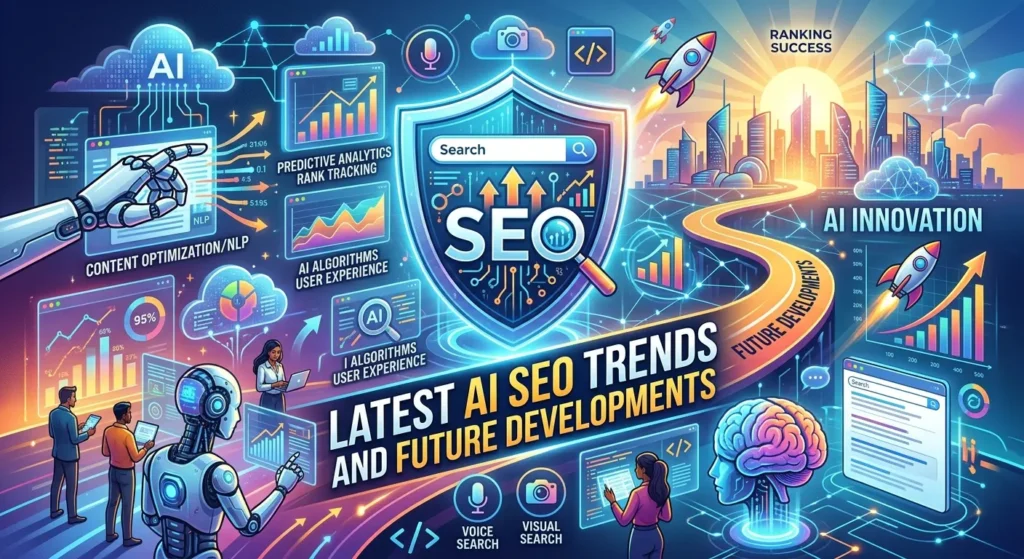
AI SEO is moving beyond simple keyword suggestions and article generation. Current platforms increasingly combine traditional SEO with AI-search visibility, prompt research, content optimization, competitor intelligence, and automated recommendations.
Semrush now describes AI visibility features that track appearances across several generative AI systems, while Ahrefs continues expanding AI capabilities for keyword research, intent analysis, content optimization, and AI visibility.
The next stage will likely involve more connected workflows. SEO platforms can increasingly help marketers move from discovering a search opportunity to researching intent, creating content, auditing technical issues, monitoring performance, and identifying new opportunities.
But the fundamentals remain important. Google’s 2026 guidance specifically reinforces the continuing importance of SEO best practices for generative AI search.
For website owners, the long-term lesson is simple: use AI to increase efficiency without sacrificing originality, accuracy, expertise, or usefulness.
How to Use AI SEO Tools Effectively in 2026 and Beyond
A practical AI SEO workflow starts with research and ends with measurement.
First, identify the audience and search intent. Then use an AI SEO platform to discover keyword opportunities and related topics. Analyze competing pages, build a content brief, and write an original article that answers the user’s actual questions.
Next, optimize the page’s structure, title, headings, internal links, metadata, and topical coverage. Run a technical audit before publishing. After publication, monitor Search Console data, rankings, organic traffic, and conversions.
Finally, update the page when the information becomes outdated or new user questions appear.
The strongest approach is AI-assisted rather than AI-dependent. Let software handle repetitive analysis while you provide the human elements: experience, judgment, original examples, fact-checking, and editorial quality.
Conclusion
The best AI SEO tools 2025 represent an important shift from manual SEO workflows toward faster, more intelligent optimization. They can help with keyword research, search intent, content planning, competitor analysis, technical SEO, rank tracking, and emerging AI-search visibility.
But the tool itself is only part of the strategy. Google’s guidance continues to emphasize helpful, reliable, people-first content, and its newer guidance for generative AI search reinforces traditional SEO fundamentals.
For beginners, start with a small number of tools and learn how each one supports your workflow. For experienced marketers, combine SEO data, AI assistance, human expertise, and first-party performance data.
The future of SEO is not simply about producing more content. It is about producing better answers, stronger experiences, and genuinely useful information while using AI to make research and optimization more efficient.
FAQs
What are the best AI SEO tools 2025?
Popular AI-assisted SEO platforms include Semrush and Ahrefs, along with specialized content optimization tools such as Surfer and Frase. Different tools focus on different workflows, so selection should depend on your SEO requirements rather than a universal ranking. Ahrefs published a 2025 review covering AI content optimization tools including AI Content Helper, Surfer, Frase, and Clearscope.
Can AI SEO tools improve Google rankings?
AI SEO tools can help you research keywords, optimize content, identify technical issues, and monitor performance, but no tool can guarantee rankings. Google specifically notes that third-party SEO tools do not have access to its internal ranking data and cannot guarantee performance.
Are free AI SEO tools useful for beginners?
Yes. Free tools can help beginners learn keyword research, content optimization, Search Console analysis, and basic technical SEO. Start with free options and upgrade when your project requires more data or automation.
Can AI-generated content rank on Google?
AI-assisted content can appear in search, but Google emphasizes that content should be helpful, reliable, original, and created primarily for people. Content produced mainly to manipulate rankings can violate Google’s spam policies.
Do AI SEO tools replace SEO professionals?
No. They automate parts of research and analysis, but human expertise remains important for strategy, fact-checking, brand voice, original experience, technical decisions, and understanding business goals.
What is AI SEO optimization?
AI SEO optimization refers to using artificial intelligence to assist SEO activities such as keyword research, search-intent analysis, content optimization, competitor research, technical auditing, and visibility monitoring.
Do I need separate SEO and AI-search optimization strategies?
Not necessarily. Google says its established SEO best practices remain relevant to AI features such as AI Overviews and AI Mode. AI-search monitoring can add useful measurement, but it does not replace strong technical SEO and helpful content.
What should I check before buying an AI SEO tool?
Check data quality, keyword limits, project limits, rank tracking, content features, technical audits, integrations, reporting, AI-search monitoring, and total cost. Most importantly, confirm that the tool solves a real problem in your workflow.
Which SEO data should I monitor after publishing content?
Track Google Search Console clicks, impressions, queries, rankings, organic traffic, conversions, backlinks, and engagement. Looking at several metrics gives you a better picture than relying on a single SEO score.
What is the future of AI SEO?
AI SEO is moving toward broader search visibility measurement, AI-generated recommendations, automated workflows, prompt research, and optimization for generative search experiences. However, Google’s current guidance indicates that fundamental SEO principles and valuable, unique content remain important.