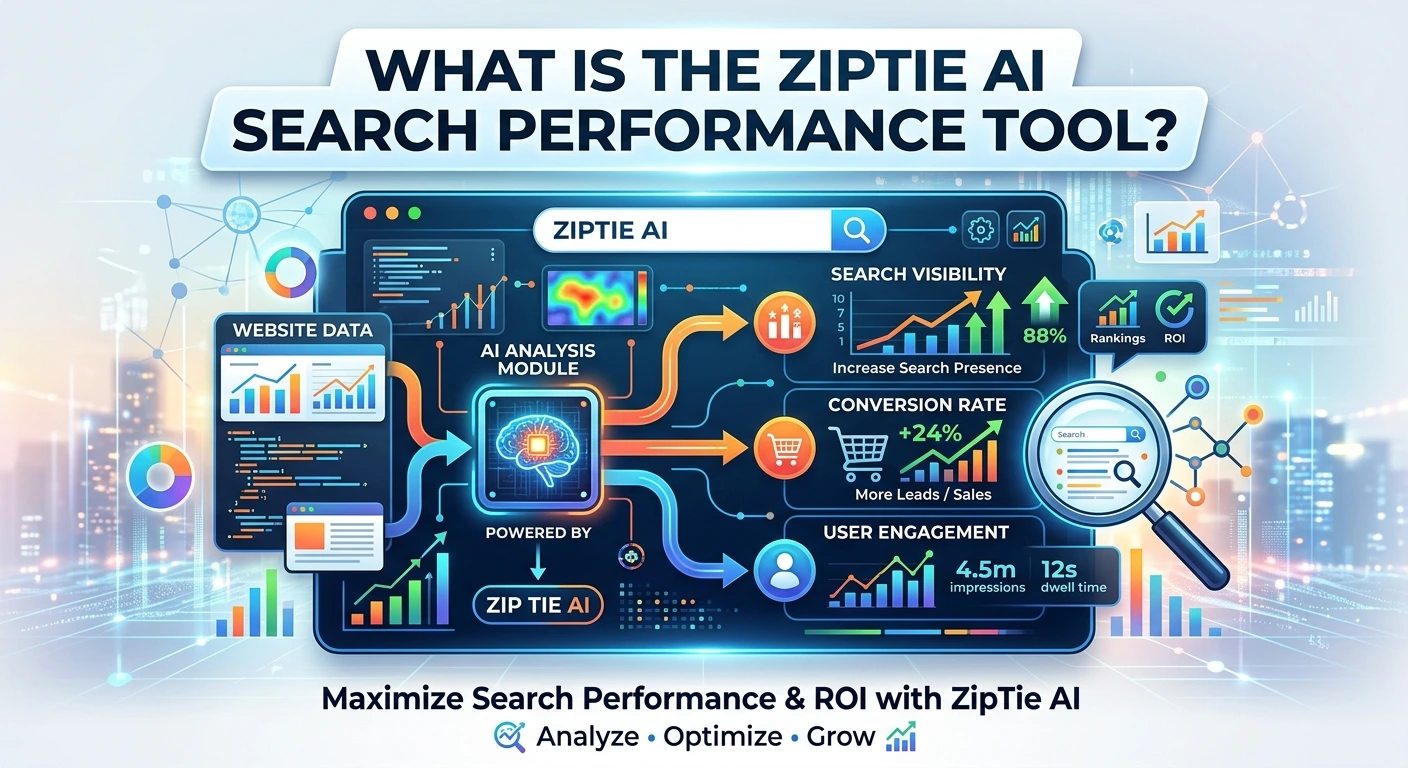

Search has changed dramatically as artificial intelligence becomes part of how people discover information, products, services, and brands. AI search optimization tools help businesses adapt by analyzing search behavior, content quality, keyword opportunities, competitors, and emerging AI-driven search patterns. Instead of relying only on traditional keyword research, these tools can help marketers understand search intent, identify content gaps, improve topical authority, and create more useful pages.
The real value goes beyond rankings. A strong AI-powered search strategy can improve productivity, efficiency, automation, creativity, and content performance while helping teams make better decisions with less manual research. Businesses can use these tools to discover opportunities faster, optimize existing pages, and create content that answers real questions.The real value goes beyond rankings. A strong AI-powered search strategy can improve productivity, efficiency, automation, creativity, and content performance while helping teams make better
Understanding how AI search optimization tools increase organic traffic is therefore important for anyone building a website in 2026. When used correctly, they can support a smarter SEO workflow that attracts qualified visitors and creates long-term search visibility.
What Are AI Search Optimization Tools?
AI search optimization tools are software platforms that use artificial intelligence, machine learning, natural language processing, or large language models to support search engine optimization. They can analyze keywords, content, competitors, search intent, entities, technical SEO signals, and other data to help marketers improve website visibility.
Traditional SEO tools often focus heavily on metrics such as search volume, keyword difficulty, backlinks, and rankings. AI-powered platforms can go further by interpreting language and relationships between topics. They may identify what a searcher actually wants, recommend related concepts, analyze content structure, or suggest ways to make a page more comprehensive.
For example, a website targeting the keyword “best project management software” should not simply repeat that phrase throughout an article. A modern search strategy may also cover collaboration, task management, team communication, integrations, pricing, automation, reporting, security, and use cases. AI tools can help identify these connected topics.
The biggest advantage is speed. Instead of manually reviewing dozens of search results and competitor pages, marketers can use AI-assisted analysis to discover patterns more efficiently. However, human judgment remains essential because AI recommendations can sometimes be inaccurate, generic, or disconnected from a specific audience.
How AI Search Optimization Tools Work
AI SEO platforms generally collect information from multiple sources and use algorithms to identify patterns. Depending on the platform, this can include keyword databases, search results, competitor content, website crawls, ranking data, backlinks, and semantic relationships.
One common workflow begins with a keyword or topic. The tool analyzes related searches and search intent, then identifies important concepts that successful content commonly addresses. It may recommend related keywords, questions, entities, subtopics, or content improvements.
Some platforms also analyze existing pages. They can detect missing sections, weak headings, unclear explanations, keyword opportunities, internal linking possibilities, or technical problems. This allows marketers to optimize content that already exists rather than constantly creating new articles.
AI tools can also automate repetitive SEO tasks. For example, a marketer might use one platform to discover keyword clusters, another to monitor rankings, and another to audit technical issues. The goal is not to remove SEO expertise but to reduce repetitive work so people can focus on strategy, originality, and user value.
How AI Search Optimization Tools Increase Organic Traffic
The most direct way AI search optimization tools increase organic traffic is by helping websites create content that better matches search intent. When a page answers the questions users actually have, it has a stronger opportunity to earn visibility and attract relevant visitors.
AI tools can identify content gaps by comparing a website with competing pages. Suppose several high-ranking articles explain how to choose an email marketing platform, but your article only discusses pricing. An AI-assisted content analysis may reveal missing subjects such as automation, templates, analytics, integrations, deliverability, and beginner-friendly features.
Another important benefit is optimization of existing content. A page may already receive impressions but few clicks. AI-assisted analysis can help identify opportunities involving titles, descriptions, headings, internal links, content depth, or search intent alignment.
Organic traffic also improves when websites target multiple relevant search opportunities instead of one isolated keyword. AI can help group related queries into topic clusters, allowing one comprehensive content strategy to cover broader areas of interest.
However, no tool can guarantee rankings or traffic. Search algorithms change, competition varies, and users behave differently across industries. AI tools should therefore be treated as decision-support systems, not automatic ranking machines.
AI-Powered Keyword Research and Search Intent
Keyword research remains an important part of SEO, but AI makes it possible to analyze keywords in a more contextual way. Instead of looking only at search volume, marketers can examine the purpose behind a query.
Search intent generally falls into categories such as informational, navigational, commercial, and transactional. Understanding intent helps determine what type of content should be created.
For example, someone searching “what is technical SEO” probably wants an educational explanation. Someone searching “best technical SEO tools” may be comparing solutions. A person searching “technical SEO software pricing” is much closer to a purchasing decision.
AI-powered keyword tools can group similar queries and identify relationships between them. This can help marketers build content clusters instead of producing dozens of disconnected pages.
A practical approach is to select a primary topic and then identify:
- Related questions users ask
- Long-tail keywords
- Commercial variations
- Comparison searches
- Problem-focused queries
- Location-based searches when relevant
- Related entities and concepts
- Frequently discussed subtopics
The result is a more complete search intent map that can guide both content creation and optimization.
Content Optimization for Google and AI Search
Modern search optimization is increasingly about making information easy for both people and machines to understand. Clear structure, accurate information, strong topical coverage, and useful explanations can make content easier to interpret.
AI search optimization tools can evaluate headings, paragraphs, entities, keyword relationships, readability, and topic coverage. Some can identify concepts that appear frequently across relevant search results and suggest areas worth addressing.
This does not mean copying competitors. In fact, copying the same structure can make content less distinctive. Instead, use competitive analysis to understand what users expect, then provide a more useful and original experience.
Content should answer the main question quickly. Important information should appear near the beginning, while deeper explanations can follow. Descriptive headings, concise paragraphs, examples, definitions, and clear language also help users navigate long pages.
For AI-driven search experiences, factual clarity matters even more. Make claims carefully, explain concepts directly, and demonstrate expertise where appropriate. A page that provides genuinely useful information has more long-term value than one designed purely around keyword frequency.
Top Features to Look for in AI SEO Tools

Not every AI search optimization platform provides the same capabilities. Choosing the right tool depends on your goals, website size, budget, and level of SEO experience.
One valuable feature is AI keyword research. Look for tools that identify related terms, long-tail queries, search intent, and keyword clusters rather than simply generating huge lists of phrases.
Another useful feature is content analysis. A strong platform should help you understand whether a page adequately covers its subject and whether important concepts are missing. Some tools also provide recommendations for headings, internal links, readability, and semantic relevance.
Technical SEO features can also matter. Website crawlers may identify broken links, duplicate content, missing metadata, slow pages, indexing problems, and other technical issues.
Other useful capabilities include:
- Rank tracking
- Competitor analysis
- Content briefs
- Topic clustering
- Internal linking suggestions
- Backlink analysis
- Search intent classification
- Content performance monitoring
- Automated reporting
- Integration with analytics platforms
- AI-assisted content recommendations
The best tool is not necessarily the one with the most features. Choose a platform that fits your workflow and provides recommendations you can actually implement.
Benefits of Using AI Search Optimization Tools
The first major benefit is time savings. SEO research can involve thousands of keywords, hundreds of competitors, and large amounts of website data. AI can process patterns much faster than manual analysis.
The second benefit is improved consistency. When teams use a repeatable optimization workflow, they are less likely to overlook important SEO elements. This can be especially useful when managing large websites with many pages.
AI tools can also support better content decisions. Instead of guessing which topics deserve attention, marketers can use search data and competitive signals to prioritize opportunities.
Another major advantage is scalability. A small content team can use automation to handle repetitive tasks that would otherwise require significant manual effort.
There are also creative benefits. AI-assisted research can reveal questions, angles, comparisons, and content formats that a marketer might not immediately consider.
However, AI should support creativity rather than replace it. The strongest content still requires human experience, original insights, accurate information, editing, and an understanding of the audience.
AI SEO Use Cases for Different Types of Websites
AI search optimization tools can support many different website types. For ecommerce websites, they can help identify product-related searches, comparison queries, category opportunities, and informational content ideas.
A software company can use AI SEO analysis to discover searches around product features, alternatives, integrations, pricing, tutorials, and common problems. This can help create a content funnel that serves users at different stages of the buying journey.
Publishers and blogs can use AI to identify trending topics, related questions, content gaps, and opportunities to update older articles.
Local businesses can use AI-assisted research to identify location-specific searches and customer questions. For example, a service provider may discover that customers search not only for the service itself but also for pricing, availability, preparation, maintenance, and comparisons.
B2B companies can benefit from topic clustering and long-form educational content. Complex industries often have specialized terminology and detailed buyer journeys, making semantic analysis especially useful.
The key is to connect SEO data with business goals. Traffic alone is not the objective. The most valuable traffic comes from people who are likely to engage, subscribe, contact the company, or purchase a relevant product or service.
Free vs Paid AI Search Optimization Tools
Free AI SEO tools can be useful for beginners, students, small websites, and marketers testing a new workflow. They may provide basic keyword suggestions, content ideas, limited audits, or simple analysis.
Paid platforms usually offer deeper databases, larger usage limits, historical data, advanced competitor research, automated reporting, technical crawls, and integrations.
A free tool can be enough when your website is small and your SEO needs are simple. A paid platform becomes more valuable when you manage many pages, multiple websites, a content team, or a competitive industry.
Before paying for a platform, consider the actual problem you want to solve. If you mainly need keyword ideas, a large enterprise SEO suite may be unnecessary. If you need technical crawling and competitor monitoring, a basic AI writing tool will not be enough.
Look for free trials or limited plans when available. Test the recommendations against your own workflow before committing to a long-term subscription.
Integrations and SEO Workflow Automation
Integrations allow AI SEO tools to connect with other systems used by marketers and website owners. Depending on the platform, integrations may include analytics software, search performance platforms, content management systems, spreadsheets, project management tools, and reporting systems.
This can create an efficient workflow. For example, ranking data can reveal pages losing visibility. An SEO platform can then analyze those pages and identify potential optimization opportunities. A content team can receive the recommendations through its existing project management system.
Automation is particularly valuable for repetitive tasks. Scheduled audits, ranking reports, content monitoring, and alerts can reduce manual work.
A practical automated workflow might look like this:
Research → Topic clustering → Content creation → Optimization → Publishing → Performance monitoring → Updating
The important step is human review. Automated recommendations should be checked before implementation because SEO decisions depend on context.
Good automation does not mean removing humans from the process. It means using technology to make human expertise more productive.
Pros and Cons of AI Search Optimization Tools
AI SEO tools offer several advantages. They can analyze large datasets quickly, automate repetitive work, discover keyword relationships, identify content gaps, monitor performance, and support scalable SEO strategies.
They can also make SEO more accessible to beginners. A new website owner may not know how to analyze search intent or structure a topic cluster. AI-assisted recommendations can provide a starting point.
However, there are limitations. AI-generated recommendations may sometimes be generic, inaccurate, or based on incomplete information. Different tools can also provide conflicting recommendations.
Another concern is over-optimization. If marketers blindly follow every AI suggestion, content can become repetitive or unnatural. Excessive keyword insertion can reduce readability and user trust.
There is also the risk of producing large amounts of similar AI-generated content. Publishing more pages does not automatically create more organic traffic. Search engines and users benefit from original, useful, trustworthy content, not content volume alone.
The best approach is to combine AI efficiency with human judgment.
Common Mistakes When Using AI SEO Tools
One of the biggest mistakes is treating AI recommendations as guaranteed SEO instructions. A recommendation should be evaluated against the website, audience, industry, and search intent.
Another common mistake is focusing entirely on keywords. Search engines increasingly understand topics and context, so repeatedly inserting the same phrase can make content worse rather than better.
Creating content without a clear audience is another problem. AI can generate endless topics, but not every topic deserves a page. Ask whether the subject is relevant to your business and whether your audience genuinely needs the information.
Some marketers also ignore existing content. Before publishing another article, check whether an older page could be improved, expanded, consolidated, or redirected.
Finally, avoid relying exclusively on AI-generated text. Human editing, fact-checking, first-hand knowledge, examples, and original perspectives can make content substantially more useful.
AI works best as an assistant within a thoughtful SEO strategy.
How to Measure Organic Traffic Growth From AI SEO

Measuring results is essential because AI recommendations only matter when they contribute to meaningful outcomes.
Start with organic impressions and clicks. These metrics show whether your pages are becoming more visible and attracting search visitors.
Next, examine keyword rankings and landing-page performance. Look for pages that move upward after optimization and determine which changes may have contributed to the improvement.
Engagement metrics can provide additional context. If traffic increases but visitors quickly leave, the content may not satisfy search intent. High-quality SEO should attract the right visitors, not simply more visitors.
Conversions are even more important for commercial websites. Depending on the business, a conversion could mean a purchase, lead, registration, download, contact form submission, or newsletter signup.
Track changes over time rather than judging performance immediately. SEO often takes weeks or months to produce measurable results, and external factors can influence rankings.
A strong measurement framework connects search visibility → organic traffic → engagement → conversions → business value.
Latest AI Search Optimization Trends and Future Developments
Search is moving beyond the traditional list of ten blue links. AI-generated answers, conversational interfaces, multimodal search, voice interactions, and entity-based understanding are changing how people discover information.
This makes semantic SEO increasingly important. Websites should explain subjects comprehensively and connect related concepts naturally instead of creating isolated pages for every keyword variation.
Another important development is the growing importance of content that can be easily understood and referenced by AI systems. Clear definitions, direct answers, structured information, credible sources, and strong topical context can help machines interpret content.
Multimodal search is another area to watch. Users can increasingly search with combinations of text, images, voice, and other inputs. Businesses may need to optimize not only written pages but also images, videos, product information, and structured data.
The future of AI SEO is unlikely to be about finding a single secret optimization technique. Instead, successful websites will focus on technical quality, helpful content, authority, user experience, structured information, and genuine expertise.
AI tools will likely become more integrated into everyday SEO platforms. They may automate more analysis and monitoring, but strategic human oversight will remain valuable.
Best Practices for Increasing Organic Traffic With AI SEO
Start with your audience rather than the tool. Understand what people want to accomplish when they search for your topic.
Use AI to accelerate research, not to manufacture expertise. Let tools identify opportunities, but add your own knowledge, examples, analysis, and experience.
Build topic clusters around important subjects. A strong pillar page can connect to detailed supporting articles, creating a logical internal linking structure.
Update content regularly when information changes. AI tools can help identify pages that are losing traffic or becoming outdated.
Prioritize quality over quantity. Ten genuinely useful pages can be more valuable than one hundred thin articles created simply because an AI system suggested keywords.
Use descriptive titles and headings. Make pages easy to scan and ensure each section provides a clear purpose.
Strengthen internal linking. Connect related pages using natural anchor text so users and search engines can understand relationships between topics.
Monitor competitors without copying them. Analyze their strengths and weaknesses, then create something more useful and distinctive.
Finally, review every AI-generated recommendation before implementing it. The strongest SEO strategy combines automation, data, creativity, expertise, and human judgment.
Conclusion
Understanding how AI search optimization tools increase organic traffic starts with recognizing that AI is not a replacement for SEO strategy. These tools help marketers process information faster, discover search opportunities, analyze competitors, identify content gaps, optimize existing pages, and automate repetitive tasks.
Their biggest value comes from improving the entire SEO workflow. Keyword research becomes more contextual, content planning becomes more organized, optimization becomes more data-driven, and performance monitoring becomes easier.
Still, tools alone cannot guarantee organic growth. Search visibility depends on many factors, including relevance, content quality, technical health, authority, competition, user experience, and changing search behavior.
The most effective approach is to use AI for research, analysis, automation, and efficiency, while relying on human expertise for strategy, creativity, accuracy, and originality.
As search continues to evolve through AI-powered answers and conversational discovery, businesses that focus on genuinely useful information will be better positioned for sustainable organic growth.
Frequently Asked Questions
Do AI SEO tools really increase organic traffic?
Yes, they can contribute to organic traffic growth by helping identify relevant keywords, search intent, content gaps, technical problems, and optimization opportunities. However, they do not guarantee rankings or traffic. Results depend on implementation, competition, content quality, website authority, and other SEO factors.
How do AI tools find SEO opportunities?
AI SEO tools can analyze keyword databases, search results, competitor pages, ranking information, website content, and semantic relationships. They use these signals to identify opportunities such as related keywords, missing topics, weak pages, internal linking opportunities, and content gaps.
Can AI SEO tools replace an SEO expert?
AI tools can automate many repetitive tasks, but they do not completely replace experienced SEO professionals. Human expertise remains important for strategy, business context, fact-checking, technical decisions, content quality, and interpreting recommendations.
Are free AI SEO tools good enough for beginners?
Free tools can be useful for learning SEO and handling basic tasks. Beginners can use them for keyword research, content ideas, simple audits, and optimization experiments. As a website grows, paid tools may become more useful because they often provide deeper data and higher usage limits.
How long does it take to see organic traffic improvements?
There is no universal timeline. Some pages may gain visibility relatively quickly, while competitive topics can take much longer. SEO performance depends on website authority, competition, content quality, technical health, and search demand. Measuring progress over several weeks or months provides a more realistic picture.
Can AI-generated content rank on search engines?
AI-generated content can potentially appear in search results, but simply generating text does not guarantee rankings. Content should provide genuine value, demonstrate appropriate expertise, remain accurate, and satisfy the user’s search intent. Human review and meaningful original information can significantly improve quality.
What is the difference between traditional SEO and AI SEO?
Traditional SEO relies on established practices such as keyword research, technical optimization, link building, content optimization, and ranking analysis. AI SEO adds machine-learning and language-processing capabilities that can help interpret intent, identify semantic relationships, automate analysis, and process large amounts of data more efficiently.
How can AI SEO improve existing content?
AI tools can analyze older pages for declining rankings, missing topics, weak structure, keyword opportunities, internal linking possibilities, and outdated information. Marketers can then improve those pages instead of automatically creating new content.
Is AI search optimization important in 2026?
Yes. Search behavior continues to evolve as AI-powered search experiences become more common. Websites should focus on clear, useful, trustworthy, well-structured content while continuing to maintain strong technical SEO and user experience.
What is the best way to use AI SEO tools?
The best approach is to treat AI as a strategic assistant. Use it for research, analysis, automation, monitoring, and idea generation, then apply human judgment to content quality, accuracy, originality, and business strategy.