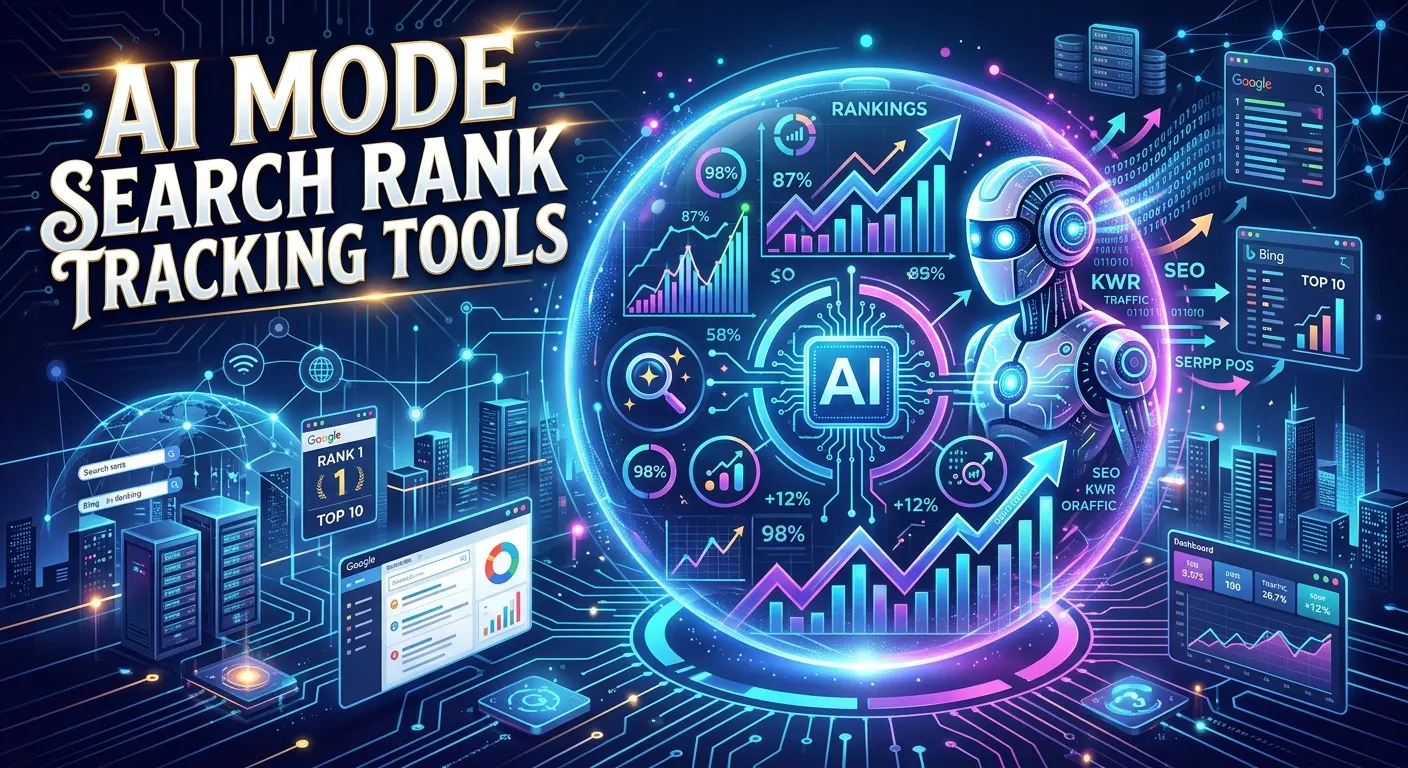
AI-powered search is changing how people discover information, compare brands, and make buying decisions. Traditional keyword rankings still matter, but they no longer show the complete picture of how a website appears inside AI-driven search experiences. AI mode search rank tracking tools help marketers monitor visibility across modern search results, AI-generated answers, citations, mentions, and related search experiences.
These tools can improve productivity, efficiency, automation, and decision-making by turning complex search data into useful insights. Instead of checking hundreds of queries manually, marketers can monitor important keywords and identify how AI systems represent their brands. They can also compare competitors, discover content gaps, and find opportunities to improve visibility. For businesses, agencies, publishers, and freelancers, AI search tracking provides a practical way to understand how search behavior is evolving and where optimization efforts should focus.
What Are AI Mode Search Rank Tracking Tools?
AI mode search rank tracking tools are SEO platforms or specialized monitoring systems designed to track website and brand visibility in AI-powered search experiences. Traditional rank trackers mainly monitor positions such as first, fifth, or tenth in conventional search results. AI-focused tools look beyond those positions.
Depending on the platform, monitoring can include AI-generated answers, brand mentions, citations, linked sources, search visibility, competitor mentions, and query-level performance. This gives marketers additional information about how their content appears when users interact with AI-assisted search features.
For example, imagine a company sells project management software. A traditional rank tracker may show that its article ranks number four for a keyword. An AI search tracking platform may additionally show whether the company gets mentioned when users ask an AI-powered search engine for the best project management software.
This distinction is important because visibility does not always equal a traditional blue-link ranking. A brand may receive attention through an AI-generated response even when its conventional organic position tells only part of the story.
How AI Mode Search Rank Tracking Works
AI search tracking generally begins with a list of target queries, keywords, topics, or prompts. The tracking platform monitors those queries and records available information about how AI-powered search experiences respond.
The system may analyze whether a brand appears in the response, whether its website receives a citation, which pages are referenced, and which competitors appear alongside it. Some platforms also monitor changes over time so marketers can identify whether visibility is improving or declining.
A simple workflow looks like this:
Choose queries → run monitoring → collect AI search results → identify mentions and citations → compare competitors → analyze changes → improve content.
The exact methodology varies between tools. Some products focus heavily on AI visibility, while others combine AI monitoring with conventional keyword tracking, technical SEO data, backlink information, and content analysis.
For this reason, marketers should understand what a tool actually measures before treating its data as a direct equivalent of a traditional Google ranking.
Key Features of AI Mode Search Rank Tracking Tools
The most useful platforms combine several monitoring features in one workflow. AI visibility tracking is one of the core capabilities because it helps users understand whether their brand appears in AI-generated search experiences.
Another important feature is citation monitoring. When an AI system references web sources, marketers can examine which pages receive visibility. This can reveal which content types and topics are attracting attention.
Competitor monitoring can also be valuable. A tool may show which competing brands appear for the same prompts or topics. This helps marketers identify patterns and investigate what those competitors are doing differently.
Other useful features can include:
- Keyword and query tracking
- AI response monitoring
- Brand mention tracking
- Citation tracking
- Competitor visibility analysis
- Historical reporting
- Search visibility trends
- Content performance analysis
- Automated alerts
- Data exports
- Team reporting
- API access
- SEO integrations
The best feature set depends on whether the user needs simple monitoring or a complete SEO and AI-search workflow.
Benefits of Using AI Mode Search Rank Tracking Tools
One major benefit is time savings. Manually testing hundreds of AI search prompts can take hours. Automated monitoring can organize those checks and make recurring analysis much easier.
These tools can also improve decision-making. Instead of relying only on traditional rankings, marketers can examine whether their brand is being mentioned, cited, or represented in AI-generated responses.
Another advantage is competitive research. Suppose your website receives little AI visibility while several competitors appear regularly. Tracking data can help you investigate their content, authority signals, topic coverage, and citation patterns.
AI search tracking can also support content strategy. If AI systems repeatedly reference certain pages about a topic, those pages may provide useful clues about what information search systems find relevant. Marketers can use those observations to improve clarity, depth, structure, and factual usefulness.
For agencies and freelancers, reporting is another practical benefit. Automated AI visibility reports can make it easier to communicate progress to clients without manually collecting screenshots for every query.
AI Search Rank Tracking vs Traditional SEO Rank Tracking
Traditional SEO rank tracking answers a question such as: “Where does this webpage rank for this keyword?”
AI search monitoring asks a broader question: “How does this brand or webpage appear within AI-assisted search experiences for this query?”
Traditional tracking remains useful because organic rankings can still provide valuable information about search performance. However, AI-powered search introduces additional forms of visibility that conventional ranking reports may not capture.
For example, a page might rank seventh organically but still be referenced in an AI-generated answer. Another page could rank highly for a keyword but receive little visibility in a particular AI response.
This means marketers should not necessarily replace traditional SEO tracking with AI tracking. A more complete strategy can monitor both conventional search performance and AI search visibility.
The two systems also use different metrics. Traditional SEO commonly focuses on rankings, impressions, clicks, and traffic. AI search analysis may additionally focus on mentions, citations, presence in generated answers, share of AI visibility, and competitor presence.
Important Use Cases for AI Mode Search Tracking
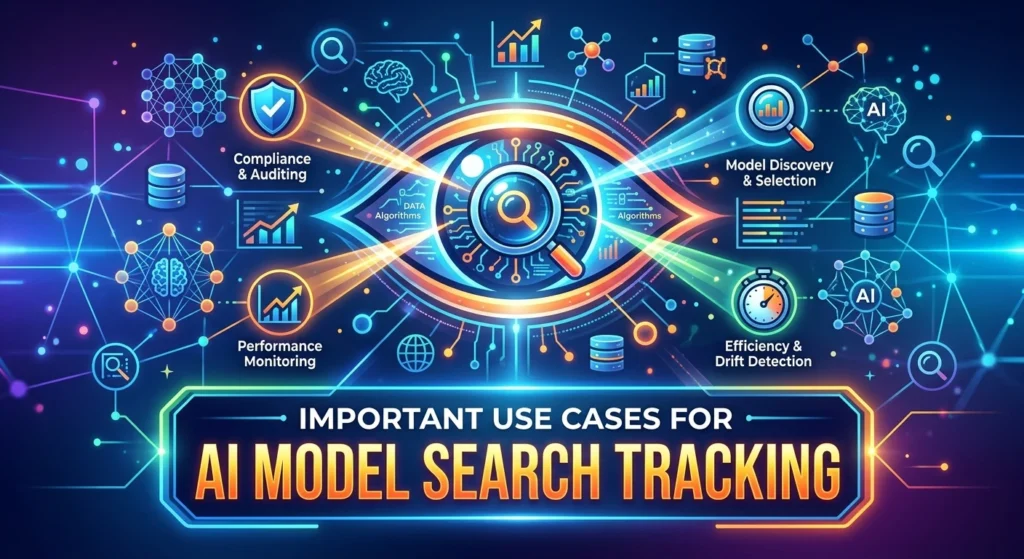
AI search rank tracking can support many types of businesses. SEO agencies can use it to monitor multiple clients and create recurring reports about AI visibility.
Freelancers can use these tools to demonstrate additional value to clients. For example, instead of reporting only keyword positions, a freelancer could analyze whether important commercial queries generate brand mentions or citations.
Ecommerce businesses can monitor product-related searches. SaaS companies can track comparison queries, solution searches, and category questions. Publishers can examine whether their articles appear as cited sources for informational topics.
Large companies can also use AI monitoring for brand reputation and search intelligence. Tracking how AI systems describe a company may help teams discover incorrect information, missing context, or competitor narratives that deserve further investigation.
Common use cases include:
- Monitoring brand visibility
- Tracking competitor mentions
- Measuring content performance
- Finding citation opportunities
- Researching commercial queries
- Supporting SEO reporting
- Discovering content gaps
- Monitoring changing search behavior
- Measuring AI-search presence over time
Free vs Paid AI Mode Search Rank Tracking Tools
Free tools can be useful for beginners who want to understand AI search visibility without committing to a subscription. Some may offer limited query tracking, basic monitoring, or manual analysis.
However, free solutions often have restrictions. They may limit the number of tracked keywords, projects, historical data points, users, reports, or automated checks.
Paid platforms generally provide broader monitoring capabilities. Depending on the product, a subscription may include larger keyword limits, scheduled tracking, competitor analysis, historical data, reporting, integrations, and API access.
A beginner should not automatically choose the most expensive platform. Start by identifying the questions you need the tool to answer. If you only need to monitor 20 important queries, a simple platform may be enough. If you manage hundreds of keywords across several websites, advanced monitoring may provide greater efficiency.
The key is to compare actual features and limits, not just subscription prices.
Pricing Factors to Consider Before Choosing a Tool
Pricing for AI search tracking platforms can vary significantly. The cost usually depends on the number of tracked queries, websites, users, monitoring frequency, historical data, and advanced reporting features.
Some platforms use monthly subscription plans. Others may structure pricing around usage, tracked keywords, projects, or API consumption.
Before paying, check whether the advertised plan includes the features you actually need. A low starting price can become expensive if you need additional keywords, users, locations, or reporting capacity.
Also consider data freshness. A platform that checks queries frequently may provide different value from one that updates data less often. Monitoring frequency should match the importance of the queries.
For agencies, reporting and multi-project support can matter more than a small difference in monthly pricing. For a small website, basic query monitoring may be sufficient.
Integrations and Reporting for AI Search Tracking
Integrations can make AI visibility data more useful because marketers rarely work with search data in isolation. Connecting tracking information with existing SEO, analytics, content, or reporting workflows can reduce manual work.
Depending on the platform, integrations may include analytics systems, SEO platforms, spreadsheets, dashboards, APIs, or reporting software. Always verify the exact integrations offered by a specific tool because features change over time.
Automated reporting is particularly useful for agencies. A monthly report can show changes in tracked AI visibility, important mentions, citation patterns, competitor activity, and recommended areas for further research.
For internal SEO teams, dashboards can help different departments understand search performance. Content teams can use query-level insights, while marketing managers may prefer high-level visibility trends.
Good reporting should answer three questions:
What changed? Why might it matter? What should we investigate next?
A report that provides numbers without useful context is much less valuable.
How to Choose the Right AI Mode Search Rank Tracking Tool
Start with your objective. If your primary goal is monitoring brand mentions, prioritize strong AI visibility tracking. If you need conventional SEO and AI monitoring together, look for a platform that supports both.
Next, examine query coverage. Make sure the tool can monitor the types of searches that matter to your business. Informational, commercial, branded, local, and comparison queries may require different approaches.
Check data frequency and historical reporting as well. Historical data helps identify trends instead of forcing you to judge performance from a single snapshot.
Also consider usability. A technically powerful platform can still create problems if the dashboard is confusing or reports are difficult to understand.
Before choosing a subscription, ask:
- How many queries can I track?
- How frequently are they checked?
- Does the platform monitor AI responses?
- Does it track citations?
- Can I monitor competitors?
- Is historical data available?
- Can I export data?
- Does it support multiple websites?
- Are reports automated?
- Is API access available?
- What happens when I exceed usage limits?
These questions can help you select a platform based on practical requirements rather than marketing claims.
Popular Alternatives to Dedicated AI Rank Tracking Tools
Dedicated AI search tracking platforms are not the only option. Traditional SEO platforms are increasingly adding features related to AI search visibility, content analysis, and emerging search experiences.
You can also perform manual AI search research. This approach costs little but requires more time. It can work well for a small number of important queries.
Another alternative is to combine several tools. For example, a business might use a conventional rank tracker for organic positions, an analytics platform for website traffic, and an AI visibility monitoring product for AI search behavior.
The right combination depends on the website’s size, budget, team, and goals.
The important point is to avoid buying multiple tools that provide almost identical information. Before adding a new platform, identify the specific data gap it will solve.
Best Practices for Improving AI Search Visibility
Tracking alone does not improve visibility. The real value comes from using the data to improve your website.
Start by creating clear, useful, trustworthy content that directly answers important questions. Use descriptive headings, concise explanations, supporting evidence, relevant examples, and logical internal linking.
Keep important information easy to understand. AI systems need to interpret content, and human readers need to find answers quickly. Clear writing benefits both audiences.
Build topical depth instead of publishing many shallow pages. A strong content cluster can cover the main topic, supporting questions, comparisons, practical examples, and related concepts.
Maintain accurate information. Update outdated statistics, product details, pricing, screenshots, and claims when appropriate.
You should also strengthen your site’s overall credibility through clear authorship, useful references, transparent business information, and consistent content quality.
Most importantly, do not write only for AI systems. Create content that genuinely helps people. Strong human usefulness should remain the foundation of search optimization.
Common Mistakes When Tracking AI Search Rankings
One common mistake is treating AI visibility as exactly the same thing as a traditional Google ranking. AI-generated responses can vary, and different search experiences may use different systems and sources.
Another mistake is tracking too many irrelevant queries. A huge keyword list may look impressive but can make analysis difficult. Focus first on searches that connect directly to your audience, products, services, and important topics.
Some marketers also rely on one measurement. AI visibility should be viewed alongside traffic, conversions, organic rankings, content quality, and business goals rather than as a standalone success metric.
Ignoring competitors is another missed opportunity. If another company consistently appears for important queries, examine the pages and topics associated with its visibility.
Finally, avoid reacting to every short-term change. AI search experiences can change quickly. Look for meaningful patterns over time before making major content decisions.
AI Search Tracking Trends in 2026
AI-powered search continues to expand beyond traditional keyword-result-page behavior. This makes search visibility increasingly multi-dimensional.
One important trend is the growing focus on brand mentions and citations. Marketers want to know not only whether their pages rank but also whether AI-generated experiences reference their businesses and content.
Another trend is broader query monitoring. Instead of tracking only exact-match keywords, SEO teams increasingly need to understand conversational, question-based, comparison, and task-oriented searches.
Automation is also becoming more important. As the number of AI search experiences grows, manually checking every query becomes difficult. Automated monitoring can help teams identify meaningful changes faster.
Another emerging area is entity-level optimization. Search systems may connect brands, people, products, organizations, and topics rather than treating every webpage as an isolated result.
For SEO professionals, this means search optimization is becoming less about one ranking position and more about building a strong, understandable, trustworthy online presence.
The Future of AI Mode Search Rank Tracking Tools
The future of AI search tracking will likely involve more advanced visibility measurement. Instead of reporting only whether a brand appeared, future platforms may provide deeper analysis of context, sentiment, citations, entities, competitors, and user intent.
Automation may also become more sophisticated. A tracking platform could detect a visibility change, identify the affected topic, connect it with content changes, and suggest areas for investigation.
Another likely development is cross-platform monitoring. Businesses may want one dashboard that brings together different AI search experiences instead of checking each environment separately.
However, marketers should remain careful when interpreting automated scores. AI systems are dynamic, and a single metric may not fully represent real business value.
The strongest long-term approach will combine human expertise, high-quality content, technical SEO, trustworthy information, conventional search data, and AI visibility monitoring.
As search evolves, the role of rank tracking will also evolve. The goal will increasingly be understanding how a brand is discovered and represented across multiple search experiences.
Conclusion
AI mode search rank tracking tools give marketers a broader way to understand modern search visibility. Traditional rankings remain useful, but AI-powered search introduces additional signals such as mentions, citations, generated answers, and competitor presence.
The most effective approach is not to chase every new metric. Instead, track the queries that matter, study meaningful changes, improve content quality, and connect AI visibility data with broader SEO and business goals.
For beginners, starting with a small group of high-value queries can make the process easier. For agencies and larger teams, automated tracking, historical reporting, competitor monitoring, and integrations can create a more efficient workflow.
As AI search continues to develop, measurement will become an important part of adapting SEO strategies. The businesses that consistently study how their content is discovered, interpreted, and referenced will have better information for making future optimization decisions.
Frequently Asked Questions About AI Mode Search Rank Tracking Tools
What are AI mode search rank tracking tools?
AI mode search rank tracking tools monitor how websites, brands, and content appear in AI-powered search experiences. Depending on the platform, they can track mentions, citations, generated answers, competitors, and visibility trends.
How are AI search rank trackers different from normal rank trackers?
Traditional rank trackers primarily monitor positions in conventional search results. AI-focused trackers can examine additional visibility signals such as AI-generated responses, citations, and brand mentions.
Can AI search tracking improve SEO?
Tracking itself does not improve SEO, but the data can help marketers make better decisions. It can reveal content gaps, competitor visibility, important queries, and opportunities for further optimization.
Are free AI search rank tracking tools available?
Some platforms offer free plans, trials, limited monitoring, or manual research options. Free features often have lower limits than paid plans, so check the current usage restrictions before choosing a tool.
Should I track AI search visibility and Google rankings together?
Yes. The two types of data can provide different information. Traditional rankings can show organic search performance, while AI monitoring can provide additional insight into AI-powered search visibility.
What keywords should I track?
Start with queries that matter to your business. Include branded searches, product or service queries, commercial searches, informational questions, comparisons, and important questions your target audience may ask.
Do AI search rank tracking tools track competitors?
Many specialized platforms offer competitor monitoring, although the exact features vary. Competitor tracking can help identify which brands appear for the same topics and queries.
How often should AI search visibility be monitored?
The right frequency depends on your goals and the volatility of your search landscape. Important queries may benefit from regular automated monitoring, while smaller websites can review a focused set less frequently.
Can these tools track citations?
Some AI search monitoring platforms specifically track citations or referenced sources. Always check the product’s current feature list because coverage and methodology can differ between platforms.
What should I do if my brand does not appear in AI search results?
Start by identifying the queries where competitors or other sources appear. Then review your content for relevance, clarity, topical depth, factual accuracy, authority, and usefulness. Use tracking data to identify patterns rather than changing your entire strategy after one result.
Will AI search replace traditional SEO rank tracking?
AI search is changing SEO measurement, but traditional search data remains useful. A combined approach can provide a broader understanding of organic rankings, website traffic, and AI-powered search visibility.