
Artificial intelligence can now create highly realistic images, but some AI applications raise serious questions about privacy, consent, safety, and digital responsibility. The phrase “undress AI tool Reddit” is often used by people searching for discussions, reviews, or experiences involving AI systems that digitally alter photographs to create sexualized images without permission. This article takes a safety-focused approach rather than promoting or explaining how to use such tools.
The topic matters because AI innovation should create real-world value without causing harm. Understanding the technology, online discussions, privacy risks, and available protections can help users make safer decisions. In 2026, U.S. authorities have also increased enforcement around nonconsensual intimate imagery, including AI-generated images. The FTC says covered platforms must provide removal processes for qualifying content shared without consent.
What Does “Undress AI Tool Reddit” Mean?
The search phrase “undress AI tool Reddit” generally refers to people looking for Reddit discussions about AI systems that manipulate photographs to create the appearance that a person is undressed. These systems are sometimes described online using terms such as AI nudification, synthetic intimate imagery, or nonconsensual deepfake imagery.
From a technology perspective, the broader category involves image-generation or image-editing systems that analyze visual information and generate altered pixels. However, the important issue is not simply whether AI can modify an image. The central question is whether the person shown gave permission for that transformation and its distribution.
Reddit discussions can provide insight into how people perceive emerging technology, but online comments should not automatically be treated as reliable technical or legal advice. Users should be especially cautious when a discussion encourages people to upload someone else’s photograph or promises completely private processing.
Why Privacy and Consent Matter
A photograph may contain more information than people realize. It can reveal a person’s face, appearance, surroundings, clothing, location, or social connections. Uploading such an image to an unknown AI service can therefore create privacy and security risks beyond the generated picture itself.
Consent is equally important. A person agreeing to have an ordinary photograph taken does not automatically agree to having that photograph transformed into sexualized or intimate content. Creating or sharing such material without permission can cause serious emotional, social, reputational, and legal harm.
The FTC describes nonconsensual intimate imagery as including real images, digitally altered images, and AI-generated deepfakes. Its consumer guidance emphasizes that these images can spread quickly and cause lasting harm.
Part 2 can continue with the technology at a high level, Reddit-related misinformation, privacy risks, scams, reporting options, and the 2026 legal landscape.
How AI Image Manipulation Works at a High Level
Modern generative AI can analyze visual patterns in an uploaded photograph and generate new image content that resembles the original. Similar underlying techniques can be used for many legitimate purposes, such as background replacement, artistic transformations, restoration, and creative editing.
The concern begins when these capabilities are used to create sexualized or intimate imagery of a person without that person’s permission. I won’t provide instructions, tool names, search terms, or methods for creating such images, but understanding the general technology helps explain why privacy protection matters.
Why Reddit Discussions Need Careful Evaluation
Reddit can contain conversations about emerging AI technology, but individual posts and comments aren’t necessarily reliable evidence that a service is safe, legitimate, private, or lawful. Claims such as “completely anonymous,” “no data stored,” or “100% undetectable” should be treated skeptically unless supported by credible documentation.
Another concern is that discussions can encourage people to upload photographs to unfamiliar websites. Once an image leaves your device, you may have limited control over how the service processes, stores, or deletes it. Avoid uploading photographs of yourself or other people to questionable AI services, especially when the service’s privacy practices are unclear.
Privacy Risks From AI Image Services
Privacy risks can include image retention, account data collection, third-party sharing, security breaches, and unauthorized reuse. A service may also collect technical information such as an IP address, device information, or account details alongside uploaded material.
For safer AI use, check the service’s privacy policy before uploading ordinary photographs. Look for clear information about data retention, deletion, training use, third-party sharing, and security. If those policies are vague or difficult to understand, don’t upload the image.
What to Do if Someone Creates or Shares Harmful AI Images
If an intimate or sexualized AI image involving you is created or shared without your consent, don’t blame yourself. Save relevant evidence such as the page address, username, date, and screenshots when it is safe to do so, and use the platform’s reporting/removal process.
In the United States, the FTC says the TAKE IT DOWN Act covers real intimate images as well as digitally altered images and AI-generated deepfakes. Covered platforms must provide a removal process and, after a valid request, remove the material and known identical copies within 48 hours.
If the person depicted is under 18, the situation is especially serious. Don’t download, forward, repost, or ask others to send the material. Instead, involve a trusted adult or appropriate authority and use the platform’s reporting system.
The FTC specifically warns that image-based abuse can affect both adults and minors and can involve AI-generated deepfakes.
Common Risks Behind AI Image Manipulation Services
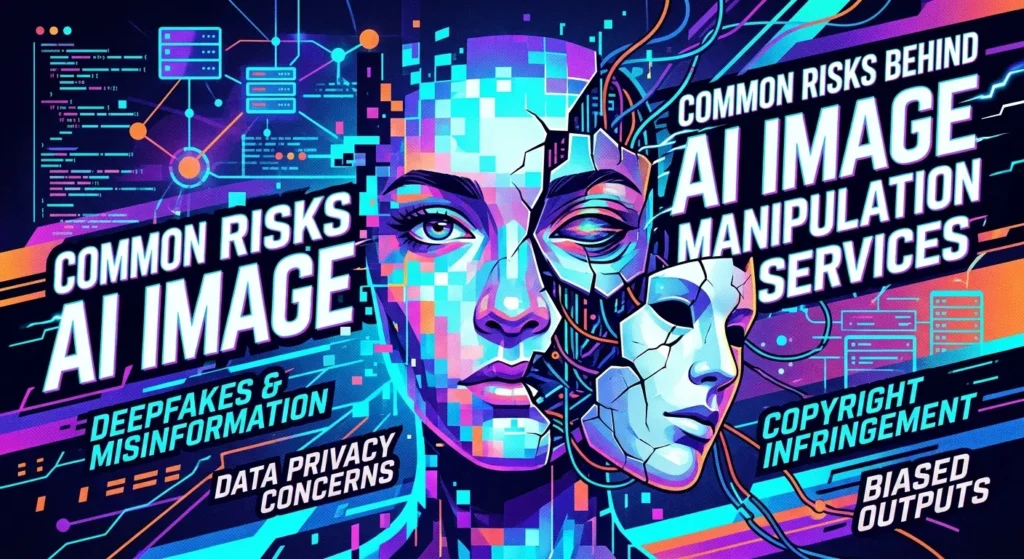
AI image services can create several risks beyond the generated image itself. A website may collect uploaded photographs, account information, payment details, or technical data. If its privacy practices are unclear, users may not know what happens to their information after an upload.
There is also a risk of fraudulent or misleading websites. Some services may advertise advanced AI capabilities while primarily trying to collect personal information, charge unexpected fees, or persuade visitors to install unsafe software. A professional-looking website does not automatically mean that a service is trustworthy.
Why “Free” AI Tools Can Be Risky
A free service is not necessarily a safer service. Some online platforms make money through advertising, subscriptions, data collection, or other business models. Before using any AI website, users should understand what information they are being asked to provide and why.
For sensitive photographs, the safest approach is not to upload them to an unfamiliar service. Avoid giving a website unnecessary personal information, and never provide passwords, identity documents, or payment information simply because a website claims that it is required for an AI feature.
Reddit Reviews Are Not Proof of Safety
Reddit can be useful for understanding public discussion, but individual comments should not be treated as professional security audits. A positive comment may reflect one person’s experience rather than the service’s overall privacy practices.
Users should also watch for fake reviews, affiliate promotion, referral links, and exaggerated claims. If a post encourages people to upload another person’s photograph or dismisses consent concerns, that is a major warning sign rather than evidence that the service is legitimate.
Safer Ways to Use AI Image Technology
AI image editing can provide genuine creative value when used responsibly. Examples include background removal, photo restoration, color correction, accessibility improvements, artistic effects, and permitted image generation.
A good rule is simple: only edit or transform images when you have the necessary permission and the intended use respects the people depicted. This approach allows users to benefit from AI innovation while reducing privacy and consent risks.
What to Do If You Encounter Nonconsensual AI Images
If you discover an intimate AI-generated image involving you or someone you know, don’t download, repost, or distribute it. Instead, use the relevant platform’s reporting and removal process and preserve only the information needed to document the incident.
In the United States, the FTC says covered platforms must provide a process for requesting removal of qualifying nonconsensual intimate images, including certain AI-generated or digitally altered images. Beginning May 19, 2026, covered platforms must remove the image and known identical copies within 48 hours after a valid request.
The FTC has also specifically warned companies offering so-called “nudify” services about their obligations under the TAKE IT DOWN Act.
For teenagers, involving a trusted parent, guardian, teacher, counselor, or another responsible adult can make it easier to deal with online abuse safely. If someone is threatening or blackmailing you, don’t negotiate with them or send additional material; seek help from a trusted adult and the appropriate authorities.