
AI search is changing how people discover brands, products, businesses, and information online. Traditional SEO still matters, but companies increasingly need to understand how their content appears in AI-generated answers, conversational search, answer engines, and large language model responses. The best AI visibility tools help marketers monitor this new search environment, identify how often a brand appears in AI answers, understand which sources influence those answers, and discover opportunities to improve visibility.
These platforms can support innovation, productivity, efficiency, automation, and data-driven content strategy by turning complex AI-search behavior into measurable insights. Whether you run a small website, SaaS company, ecommerce store, agency, or large enterprise, AI visibility software can help you understand where your brand stands today and what actions may improve its presence across emerging search experiences.
What Are AI Visibility Tools?
AI visibility tools are software platforms designed to measure and improve how a brand, website, product, or organization appears in AI-powered search experiences. Instead of focusing only on traditional rankings, they examine how AI systems mention, describe, recommend, or cite entities in generated responses.
Traditional SEO tools commonly track keywords, backlinks, rankings, traffic, and technical issues. AI visibility platforms focus on a newer layer of discovery: what AI assistants and answer engines say about your brand when users ask relevant questions.
For example, someone might ask an AI search engine, “What are the best project management tools for small businesses?” An AI visibility platform can help determine whether your product appears in the response, how it is described, which competitors are mentioned, and which sources appear to influence the answer.
This makes AI visibility measurement particularly useful for brands that want to understand Generative Engine Optimization (GEO), Answer Engine Optimization (AEO), and AI search optimization.
How AI Visibility Monitoring Works
AI visibility monitoring generally starts with a collection of search prompts related to your business, products, services, or industry. The platform sends or evaluates those prompts across supported AI search environments and records the resulting responses.
The system can then analyze factors such as brand mentions, competitor mentions, citations, rankings within AI responses, sentiment, and source visibility. Some platforms also identify recurring topics and questions where a brand is missing.
For example, a software company might track prompts such as “best CRM for startups,” “CRM alternatives for small companies,” and “how to choose a CRM.” The tool can compare how frequently the company appears against competing products.
Over time, repeated monitoring can reveal trends. You may discover that your brand appears frequently for educational questions but rarely for commercial comparisons.
The important difference is that AI visibility is not exactly the same as traditional search ranking. AI responses can change based on the prompt, model, context, sources, location, and other factors.
Key Features of the Best AI Visibility Tools
The strongest AI visibility platforms typically combine monitoring, competitive intelligence, citation analysis, and reporting. The exact feature set varies between providers, but several capabilities are particularly useful.
Prompt tracking allows marketers to monitor questions that potential customers may ask AI systems. Good tools let users organize prompts by topic, product, audience, funnel stage, or business objective.
Brand mention tracking shows when a company, product, or website appears in AI-generated responses. Some platforms also examine whether the mention is positive, neutral, or negative.
Citation analysis is another important feature. It can reveal which websites, publications, documents, or pages AI systems reference when producing answers.
Useful capabilities may include:
- AI answer monitoring
- Brand mention tracking
- Competitor comparison
- Citation analysis
- Share-of-voice measurement
- Sentiment analysis
- Prompt discovery
- Source monitoring
- Content gap identification
- AI search reporting
- Historical visibility tracking
- Domain comparison
- Topic analysis
- Automated alerts
- Team reporting
The best platform is not necessarily the one with the most features. Accuracy, useful insights, reliable monitoring, and actionable recommendations matter more than a long feature list.
Benefits of Using AI Visibility Tools
The biggest benefit is visibility into a new discovery channel. Traditional analytics can show where visitors came from, but they may not explain how AI systems describe your company before a click occurs.
AI visibility monitoring can reveal whether your brand is included in relevant answers and whether competitors receive more attention.
These insights can also improve content strategy. If AI systems repeatedly cite certain types of sources for a topic, marketers can investigate what makes those sources useful and determine whether their own content addresses the same user needs.
Another benefit is competitive intelligence. You can monitor competitors alongside your own brand to identify topics where they appear more frequently.
AI visibility tools can also improve efficiency by automating repetitive monitoring. Instead of manually asking hundreds of questions across different AI platforms, marketers can use a centralized system to track patterns.
For agencies and larger teams, reporting features can help communicate progress to clients and stakeholders.
AI Visibility vs Traditional SEO Tools
Traditional SEO and AI visibility optimization are closely related, but they measure different things.
SEO tools generally focus on search engine rankings, organic traffic, backlinks, keywords, technical SEO, and website performance. These remain important because search engines continue to send valuable traffic.
AI visibility tools focus more on how AI-generated answers represent your brand and which sources influence those responses.
For example, a website may rank highly for a traditional keyword but still receive little visibility in AI-generated answers. Conversely, a brand with a strong reputation across authoritative sources may appear frequently in AI responses even when its website does not hold the top traditional ranking.
This means marketers should not replace SEO with AI visibility work. Instead, they should develop an integrated strategy.
A modern search strategy can combine:
Technical SEO + useful content + authority building + structured information + AI visibility monitoring.
The two disciplines increasingly overlap because AI systems often use web content and other information sources when constructing answers.
Best AI Visibility Tools for Brands and Businesses
Different AI visibility platforms target different audiences. Some are designed for enterprise marketing teams, while others focus on agencies, SEO professionals, SaaS companies, or smaller brands.
When evaluating a platform, consider the AI systems it monitors. A tool may cover some conversational search environments but not others, so make sure its coverage matches the channels relevant to your audience.
Also examine how the platform defines a mention, citation, visibility score, or share of voice. Two tools may use different measurement methods, making direct comparisons difficult.
For businesses, reporting is another important consideration. Marketing teams need useful explanations rather than a dashboard filled with numbers.
Look for tools that help answer questions such as:
- Where does my brand appear?
- Where are competitors stronger?
- Which topics create visibility?
- Which sources influence AI answers?
- What content gaps exist?
- Is visibility improving over time?
The best AI visibility tool turns monitoring data into clear strategic actions.
Free vs Paid AI Visibility Tools
AI visibility software ranges from free or limited tools to sophisticated paid platforms. Free options can be useful for experimenting with prompts and manually checking how AI systems respond to questions about your brand.
Paid platforms generally provide more automation, larger prompt libraries, historical tracking, competitor analysis, reporting, and team features.
For a small website, paying for a large enterprise platform may not make financial sense. A simple monitoring workflow may provide enough information to get started.
Larger businesses and agencies may benefit from advanced tools because manually tracking hundreds or thousands of prompts is inefficient.
Before subscribing, review:
Prompt limits, supported AI platforms, update frequency, historical data, competitor tracking, reporting, integrations, and pricing structure.
Pricing can change frequently, and some products may charge according to tracked prompts, projects, users, or usage volume.
The best investment is the tool that produces actionable insights at a cost appropriate to your business.
AI Visibility for Content Marketing and GEO
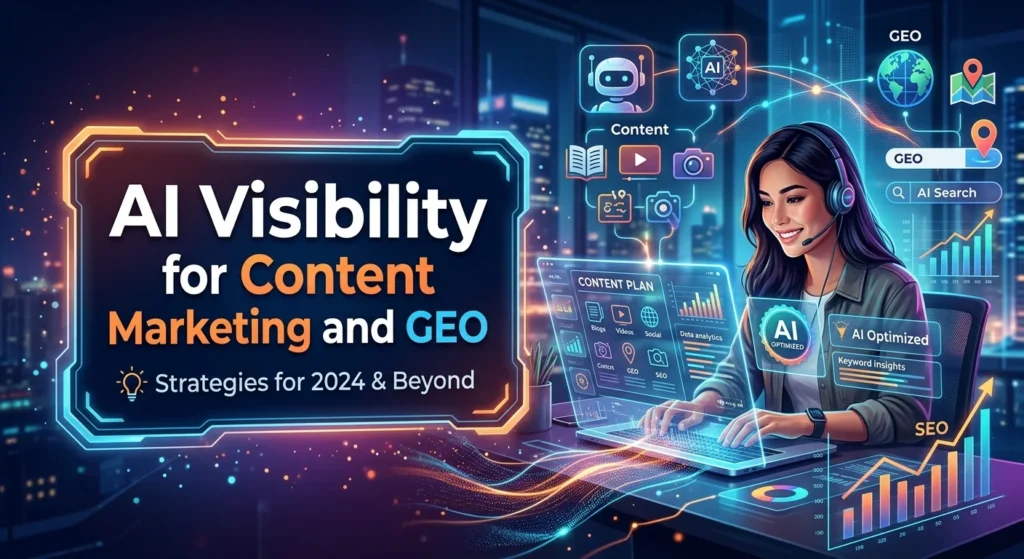
AI visibility data can help content teams understand what topics deserve attention. Instead of creating articles solely around traditional keyword volume, marketers can examine the questions people ask conversational AI systems.
For example, a cybersecurity company may discover that users frequently ask AI systems questions such as “How can a small business protect customer data?” The company can create a comprehensive resource that directly addresses that problem.
Generative Engine Optimization (GEO) focuses on improving the likelihood that content and brand information will be understood, referenced, or surfaced by AI-powered search experiences.
Useful content remains central to this process. Clear explanations, accurate facts, strong organization, relevant examples, original insights, and trustworthy sources can make content more useful to both humans and machines.
However, marketers should avoid trying to manipulate AI systems with repetitive keywords or unnatural writing. The goal should be to provide information that genuinely deserves to be included in an answer.
AI Citation Tracking and Source Analysis
Citations are an important part of AI visibility because they can show which sources influence or support generated answers.
A citation analysis feature may reveal that AI systems repeatedly reference particular publications, research papers, industry websites, documentation pages, or company resources.
This information can help marketers identify the information ecosystem surrounding a topic. If several authoritative sources discuss a subject in similar ways, that may indicate the type of information AI systems consider useful.
Marketers can use these insights to improve their own content. For example, if competitors receive citations from respected industry publications, a company might explore legitimate opportunities to contribute research, provide expert commentary, publish original data, or create genuinely useful resources.
Citation analysis should not become a simple exercise in copying other websites. Original expertise and trustworthy information remain more valuable than imitation.
AI Visibility for Local Businesses and Ecommerce
AI search is also relevant to local businesses and ecommerce companies. Consumers increasingly ask conversational questions when looking for products, services, restaurants, stores, or local recommendations.
A local business may want to know whether AI systems mention it when users ask questions about services in a particular area.
Ecommerce brands can monitor questions such as product comparisons, buying guides, alternatives, and category recommendations.
For local businesses, accurate business information across legitimate online sources remains important. Consistent names, addresses, services, descriptions, reviews, and other trustworthy signals can help users and systems understand the business.
For ecommerce, detailed product information can improve clarity. Helpful specifications, use cases, comparisons, FAQs, and original product information can make pages more useful.
The goal is not to force a business into every AI response. It is to build strong, accurate, useful information that supports genuine discovery.
Integrations and AI Visibility Workflows
Integrations can make AI visibility monitoring more useful when it connects with existing marketing systems. Depending on the platform, integrations may include analytics software, SEO platforms, content management systems, reporting tools, or workflow automation services.
A practical workflow might begin with a keyword and topic research process. The marketing team identifies important questions, adds them to an AI visibility monitoring platform, reviews the results, and identifies content gaps.
The team can then create or improve content, publish it, and continue monitoring AI visibility over time.
Agencies may use reporting integrations to produce recurring client updates. Internal marketing teams may connect visibility data with broader organic search and content performance reports.
When selecting integrations, prioritize reliability and usefulness. Too many disconnected tools can create additional administrative work instead of improving productivity.
Pros, Cons, and Limitations of AI Visibility Tools
AI visibility platforms offer significant benefits, but they are not perfect.
Their advantages include automated monitoring, competitive analysis, citation discovery, trend tracking, prompt management, and improved understanding of AI search behavior.
They can also help marketers move from speculation to measurement. Instead of simply wondering whether AI mentions a brand, teams can track specific prompts and compare results over time.
However, AI-generated responses can change quickly. Different models may provide different answers to the same question, and results can vary depending on context.
Another limitation is measurement uncertainty. A visibility score created by one platform may not directly correspond to another platform’s score.
AI visibility data should therefore be treated as an important signal rather than an absolute measurement of business performance.
Most importantly, appearing in an AI response does not automatically mean receiving customers. Marketers should connect AI visibility with broader metrics such as website traffic, leads, conversions, brand searches, and customer outcomes where possible.
Common Mistakes When Using AI Visibility Tools
One common mistake is tracking too few prompts. If you monitor only a handful of questions, you may develop an incomplete view of your brand’s visibility.
Another mistake is focusing entirely on brand mentions. Context matters. A brand mentioned frequently but inaccurately may have a different problem from a brand that is rarely mentioned.
Marketers should also avoid obsessing over visibility scores without investigating the underlying answers. Read the AI responses and examine the sources.
Another mistake is assuming that creating more content will automatically increase visibility. More pages do not necessarily create more authority.
Avoid writing content solely for AI systems. Content should first satisfy users. Clear structure, factual accuracy, original insights, and strong evidence provide a more sustainable foundation.
Finally, do not ignore traditional SEO. AI visibility and organic search should work together rather than compete for attention.
Latest AI Visibility Trends in 2026
AI visibility is becoming a more important part of digital marketing as search behavior shifts toward conversational answers. Users increasingly expect search systems to summarize information instead of simply returning a list of links.
One major trend is answer-engine optimization. Brands are paying greater attention to whether their information is understood and surfaced in AI-generated responses.
Another trend is deeper competitive analysis. Marketers increasingly want to know not only whether their brand appears, but also why competitors appear more frequently.
Multimodal search is another area to watch. AI systems can increasingly process images, video, audio, and other forms of information, meaning visibility may extend beyond traditional text content.
There is also greater emphasis on brand authority and information consistency. AI systems need reliable information about companies, products, people, and topics.
As the market matures, AI visibility tools are likely to provide more sophisticated attribution, monitoring, and recommendations. However, marketers will still need to distinguish useful signals from automated scores.
How to Choose the Best AI Visibility Tool
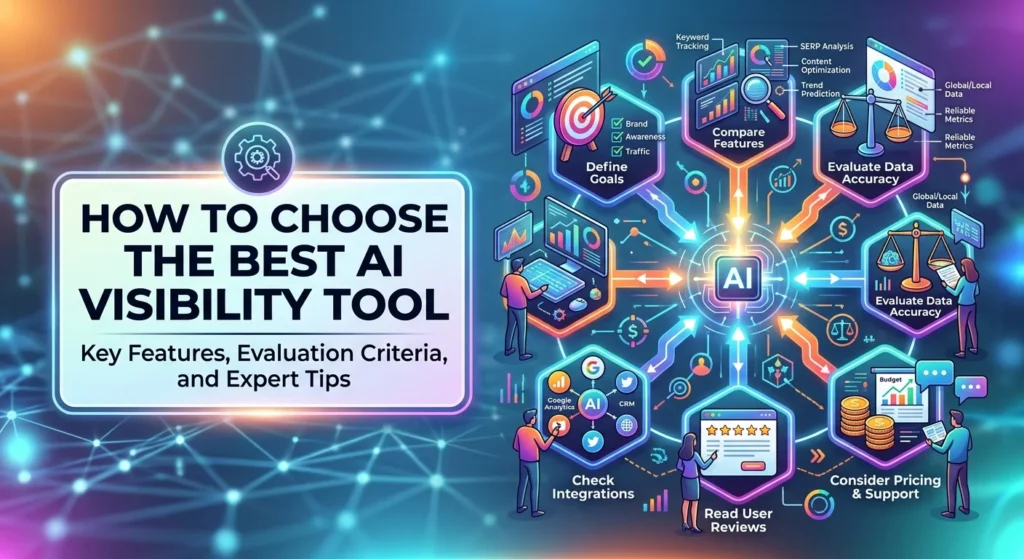
Start by defining your objective. If you are a small business, you might want to know whether AI systems mention your brand for local or commercial queries. An enterprise company may need thousands of prompts, competitor monitoring, historical data, and team reporting.
Next, evaluate AI coverage. Make sure the tool monitors the AI search environments that matter to your audience.
Then assess data quality. Ask how frequently results update, how the platform measures mentions and citations, and whether you can inspect the underlying responses.
Pricing is important, but so is usability. A technically powerful platform that your marketing team rarely uses may provide less value than a simpler tool with clear reporting.
Finally, consider whether the platform helps you act on the data. The best tools do more than tell you that visibility changed. They help explain what changed, why it may have changed, and what you can investigate next.
Frequently Asked Questions About the Best AI Visibility Tools
What are AI visibility tools?
AI visibility tools monitor how brands, products, websites, and organizations appear in AI-generated search results and conversational answers. They can track mentions, citations, competitors, prompts, and other visibility signals.
Why are AI visibility tools important?
They help businesses understand how AI-powered search experiences represent their brands. This is increasingly important as users rely on conversational answers instead of traditional search-result pages.
Are AI visibility tools the same as SEO tools?
No. SEO tools primarily measure traditional search performance, while AI visibility platforms focus on AI-generated answers and related signals. However, the two areas overlap and should be used together.
Are there free AI visibility tools?
Yes. Some basic approaches are available for free, including manually testing prompts across AI search systems. Paid platforms generally provide more automation, monitoring, reporting, and competitive intelligence.
What is GEO in AI search?
Generative Engine Optimization (GEO) refers to strategies designed to improve the likelihood that a brand or content source will be understood, referenced, or surfaced in generative AI search experiences.
Can AI visibility tools guarantee that my brand will appear in AI answers?
No. AI-generated responses depend on many factors, including the model, prompt, available information, sources, context, and system behavior. Visibility tools can measure and analyze results but cannot guarantee inclusion.
How often should I monitor AI visibility?
The ideal frequency depends on your industry and goals. Businesses in rapidly changing markets may benefit from frequent monitoring, while smaller websites may review their visibility on a weekly or monthly basis.
Do AI visibility tools improve SEO?
Indirectly, they can provide insights that inform content and authority strategies. However, an AI visibility platform does not automatically improve traditional rankings. Technical SEO, content quality, links, relevance, and other factors still matter.
What should I track besides brand mentions?
Track citations, competitors, sentiment, prompt categories, source domains, visibility trends, and business outcomes. Looking at multiple signals provides a more complete picture.
Can small businesses use AI visibility tools?
Yes. Small businesses can use AI visibility monitoring to understand whether their brand appears for relevant local, commercial, and informational questions. Starting with a focused set of high-value prompts is often practical.
Conclusion
The best AI visibility tools give marketers a clearer view of how brands are represented in the rapidly evolving world of AI-powered search. They can monitor prompts, track brand mentions, analyze citations, compare competitors, identify content gaps, and reveal trends that traditional SEO reporting may not capture.
However, AI visibility should not become a replacement for strong marketing fundamentals. Helpful content, accurate information, technical SEO, brand authority, original expertise, and genuine customer value remain essential.
The smartest strategy combines traditional search optimization with AI visibility monitoring. Use these tools to understand where your brand appears, investigate where competitors have an advantage, and discover questions your audience still needs answered.
As AI search continues to evolve through 2026 and beyond, businesses that measure their presence across emerging search experiences will be better prepared to adapt. The goal is not simply to appear in more AI answers. The goal is to become a trusted, useful, and relevant source that AI systems and human audiences have a reason to recognize.