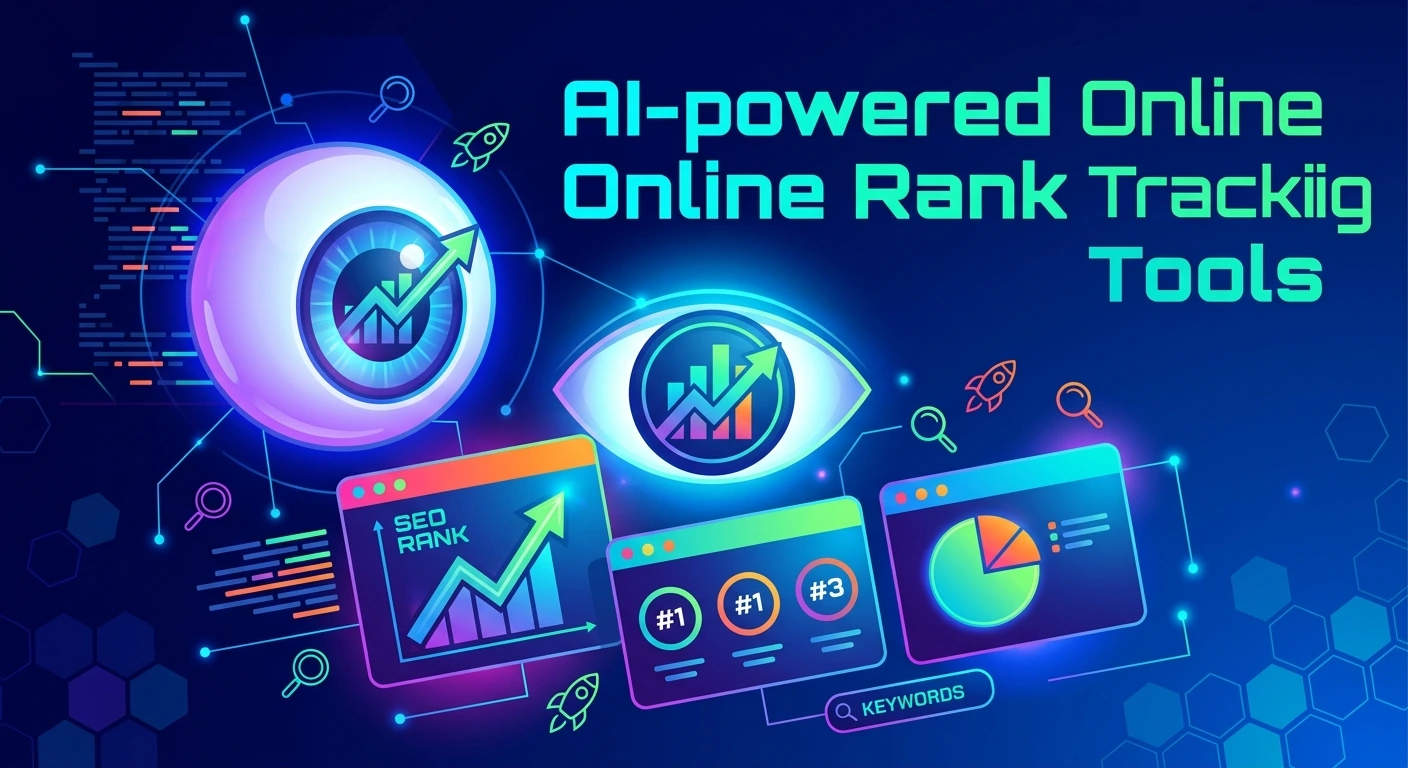
AI-powered search is changing how people discover websites, products, services, and brands. Traditional SEO rank tracking still matters, but marketers increasingly need to understand what happens when search engines generate AI-powered answers instead of showing only conventional organic listings. AI mode online rank tracking tools help businesses monitor this emerging search environment by tracking queries, visibility, mentions, citations, competitors, and changes in AI-generated results.
These tools can improve productivity, efficiency, creativity, automation, and strategic decision-making by turning large amounts of search data into practical insights. Instead of manually checking important queries every day, marketers can monitor selected keywords and prompts through dedicated dashboards. This guide explains what AI mode online rank tracking tools are, how they work, which features matter, how free and paid options differ, common mistakes, pricing considerations, and how AI search tracking may develop through 2026 and beyond.
What Are AI Mode Online Rank Tracking Tools?
AI mode online rank tracking tools are software platforms that help marketers monitor how websites, brands, products, and content appear in AI-powered search experiences. They extend traditional rank tracking by looking beyond standard organic positions and examining AI-generated search results.
Traditional rank trackers typically record where a webpage appears for a keyword. AI search tracking can involve additional signals, such as whether a brand appears in an AI-generated response, which websites receive citations, what competitors are mentioned, and which pages or sources support the answer.
For example, a company selling project management software may track a query such as “best project management tools for remote teams.” Traditional SEO software might report the company’s organic ranking. An AI-focused tracker may additionally show whether the company appears in an AI-generated answer and whether its website is referenced as a source.
This distinction matters because AI visibility and traditional search ranking are related but not identical measurements. A website can rank well organically while receiving limited AI-generated visibility, or it can be referenced in an AI response even when its conventional ranking differs.
How AI Mode Rank Tracking Works
AI mode rank tracking begins with a collection of keywords, prompts, topics, or questions that matter to a business. The tracking platform periodically checks those queries and records the resulting search information.
Depending on the tool, the system may monitor AI-generated answers, citations, brand mentions, source domains, competitors, and traditional search positions. It can then organize the information into charts, dashboards, reports, and historical comparisons.
A simplified workflow looks like this:
Select queries → run or monitor searches → collect AI and organic results → identify mentions and citations → compare competitors → track changes → analyze opportunities.
The exact methodology differs between platforms. Some tools may use direct search environments, while others rely on their own monitoring systems or datasets. For that reason, marketers should always understand what a platform actually measures before comparing one tool with another.
Reliable tracking also requires consistency. If the same query changes significantly between checks, the difference may reflect changing AI responses rather than an actual improvement or decline in a website’s overall authority.
Why Online AI Rank Tracking Matters for SEO
Search behavior is becoming more conversational. Instead of typing short keywords, users increasingly ask complete questions and expect search systems to summarize information.
This creates new challenges for SEO professionals. A business may have excellent traditional keyword rankings but still struggle to appear in AI-generated responses for commercially important questions.
AI mode tracking helps marketers investigate this gap. It can reveal which queries produce brand mentions, which competitors appear frequently, and which domains receive citations.
For example, a travel website might rank well for “best family vacation destinations,” but an AI-generated answer could repeatedly cite travel publications and competitor websites instead. Monitoring those responses gives the SEO team information that traditional ranking data alone may not provide.
The goal is not simply to chase an AI ranking. The goal is to understand how search systems discover, reference, and present useful information.
Key Features of AI Mode Online Rank Tracking Software
A useful AI rank tracking platform should provide more than a basic position number. One important feature is prompt and keyword monitoring, which allows marketers to track questions that are relevant to their audience.
Brand mention tracking is another useful capability. It helps identify whether a company appears in AI-generated responses and how frequently it appears across a selected query set.
Citation tracking can provide another layer of insight. A tool may show which domains are referenced by AI responses and which pages receive attention.
Competitor monitoring is also valuable. Marketers can compare their visibility against competing brands and identify recurring queries where other companies receive stronger exposure.
Other features may include:
- Historical visibility tracking
- Search-result snapshots
- AI citation monitoring
- Competitor analysis
- Keyword grouping
- Prompt discovery
- Automated alerts
- Scheduled reports
- Data exports
- API access
- Team collaboration
- Analytics integrations
The most useful feature set depends on the size and goals of the project. Choose capabilities based on your workflow rather than selecting a platform simply because it has the longest feature list.
Benefits of AI Mode Online Rank Tracking Tools
The biggest benefit is efficiency. Manually checking dozens or hundreds of AI search queries can take a significant amount of time. Automated tracking allows marketers to monitor selected queries from one dashboard.
These platforms can also improve strategic decision-making. Instead of guessing whether a brand appears in AI search, marketers can collect structured observations over time.
Another benefit is competitive research. If a competitor appears repeatedly for important questions, marketers can investigate the competitor’s content, expertise, citations, and topical coverage.
AI rank tracking can also help content teams identify opportunities. Suppose a company tracks 100 industry questions and notices that its website receives very few citations for a particular topic. That pattern may justify creating stronger, more comprehensive content around that subject.
Historical tracking is especially valuable. One AI-generated response provides limited evidence, while repeated observations can reveal broader patterns.
AI Mode Rank Tracking Use Cases
SEO agencies can use AI mode rank tracking tools to monitor multiple client websites. Agencies can create separate projects for different brands and report changes in AI search visibility over time.
In-house marketing teams can use the same tools to monitor brand visibility for important commercial and informational queries. This can help connect content strategy with actual search behavior.
Ecommerce companies can track product-related questions such as comparisons, buying guides, alternatives, and category recommendations. This can help identify where their products appear and which competing products receive AI visibility.
SaaS businesses can monitor questions about software categories, features, use cases, integrations, and alternatives. For example, a CRM company might track questions about the best CRM for startups, sales teams, agencies, or small businesses.
Publishers can monitor informational queries related to their subject areas. They can then investigate which sources AI systems frequently cite and whether their own content provides unique information.
AI Visibility, Rankings, Mentions, and Citations

One of the most important concepts in AI search tracking is that visibility has several different dimensions.
Traditional ranking usually refers to a webpage’s position in a search result. AI visibility can refer to whether a brand or website appears in an AI-generated answer. A mention occurs when the brand is discussed, while a citation occurs when a source is explicitly referenced or linked as supporting information.
These signals should not automatically be treated as interchangeable.
Imagine an AI-generated response that recommends five software products. A company might receive a brand mention but no citation. Another company might receive both a mention and a citation. A third company’s website could be cited as a source even though its brand receives little direct discussion.
This is why marketers should track multiple metrics rather than creating one simplistic “AI ranking.”
A practical measurement system might include:
Mention rate + citation frequency + query coverage + competitor presence + historical change.
Together, these measurements provide a broader picture of AI search visibility.
Comparing AI Mode Online Rank Tracking Tools
Not every AI rank tracking platform measures the same things. Before comparing tools, define what you actually want to monitor.
If your primary goal is brand visibility, prioritize reliable mention tracking. If content strategy is the main objective, citation and source analysis may matter more. Agencies may prioritize reporting, multiple projects, team access, and exports.
Also compare query limits, monitoring frequency, supported search environments, historical data, competitor tracking, integrations, alerts, and data accuracy.
Ease of use matters too. A platform can collect large amounts of data but still provide limited value if the dashboard is difficult to understand.
When testing a tool, use real business queries. Avoid judging a platform only from a product demonstration. Track the same set of queries for a reasonable period and determine whether the resulting information supports actual marketing decisions.
Free vs Paid AI Mode Rank Tracking Tools
Free options can be useful for learning how AI search behaves. A beginner can manually test important queries, record AI responses, note citations, and compare competitors.
The problem is scale. Manual tracking becomes increasingly difficult as the number of queries grows. It also makes historical comparisons harder because results may not be recorded consistently.
Paid tools generally offer automated monitoring, larger query limits, historical data, dashboards, alerts, and reporting. Some may also offer advanced competitor tracking or integrations.
A sensible approach is to start with a free option or trial when available. Build a small test project and monitor queries that have genuine business value.
For example, instead of tracking 1,000 random keywords, start with 25 high-value questions. If the tool produces useful insights, you can expand the project.
Pricing Factors for AI Rank Tracking Platforms
Pricing varies according to the amount of data a platform monitors and the features it provides. Some products use monthly subscriptions, while others may structure pricing around keywords, prompts, projects, domains, users, or monitoring credits.
Higher plans may include more tracked queries, more frequent monitoring, additional competitors, historical data, advanced reports, API access, or more team members.
Businesses should calculate total expected cost, not just the entry-level price. Additional projects, users, usage credits, or data exports can change the final bill.
For agencies, the number of client projects is especially important. A platform with an affordable individual plan may become expensive when dozens of domains need continuous monitoring.
Before subscribing, check:
- Number of tracked queries
- Number of projects
- Number of users
- Monitoring frequency
- Historical data availability
- Competitor limits
- Reporting features
- Data export options
- API availability
- Integration costs
- Contract and cancellation terms
Integrations and Reporting for AI Rank Tracking
Integrations allow AI visibility information to work alongside other SEO and marketing data. Depending on the software, integrations may connect with analytics platforms, SEO systems, reporting dashboards, spreadsheets, CRM tools, or business intelligence systems.
This becomes particularly useful when teams want to compare AI visibility with other performance signals.
For example, a marketing team could compare changes in AI citations with organic traffic, branded searches, content performance, or conversions. These measurements should not automatically be assumed to have a direct causal relationship, but together they can provide broader context.
Reporting is another important consideration. Good reports should make complex information easy to understand.
Look for historical charts, query-level details, competitor comparisons, scheduled reports, customizable dashboards, and export functionality.
Agencies may also need client-friendly reporting that clearly explains what changed and why the information matters.
Common Mistakes When Using AI Mode Rank Tracking Tools
One common mistake is treating AI-generated results like fixed traditional rankings. AI answers can change based on the query, context, location, language, data sources, and system behavior.
Another mistake is tracking too few queries. One question may produce a brand mention while another closely related question does not.
Marketers should also avoid focusing entirely on competitor counts. Seeing a competitor mentioned more often does not automatically explain why it appears or whether the difference produces more business value.
A third mistake is ignoring data methodology. Always understand how the tool collects and interprets AI search results.
Finally, avoid making major SEO decisions based on one unusual AI response. Look for repeated patterns across multiple relevant queries and multiple tracking periods.
Best Practices for AI Mode Online Rank Tracking
Start by building a focused keyword and prompt set. Include branded queries, non-branded questions, commercial searches, informational searches, comparison terms, and long-tail questions.
Group queries by search intent. For example, one group might contain informational questions, another might contain product comparisons, and another might contain purchase-focused queries.
Track competitors consistently. This makes it easier to identify recurring visibility patterns.
Review citations carefully. If AI systems repeatedly cite certain websites, examine what those sources provide. Look for original research, expert explanations, statistics, clear definitions, first-hand experience, or other useful evidence.
Your optimization strategy should focus on helpful, accurate, original, and trustworthy content rather than trying to manipulate AI-generated answers.
It is also useful to establish a baseline. Record initial visibility before making major content changes, then continue monitoring afterward. This creates a more meaningful way to evaluate changes.
Latest AI Mode Rank Tracking Trends in 2026
AI search measurement is moving beyond simple brand mentions. Marketers increasingly want to understand prompt-level visibility, citation behavior, competitor presence, source influence, and historical changes.
Another trend is automated insight generation. Instead of forcing users to inspect every individual result, platforms can summarize changes and identify unusual patterns for further investigation.
Query discovery is also becoming important. Rather than tracking only keywords marketers already know, AI-focused systems can help identify conversational questions that real users may ask.
Another emerging area is multimodal search. Search experiences increasingly combine text, images, videos, products, maps, and other information. Future rank tracking may therefore measure visibility across several content formats.
For marketers, this means traditional keyword tracking may become just one part of a much broader search visibility strategy.
Future of AI Mode Online Rank Tracking Beyond 2026
AI rank tracking will likely become more automated and more closely connected with broader marketing workflows. Instead of simply showing a visibility change, future systems may help explain possible reasons behind that change.
For example, an advanced platform could detect that a competitor began appearing for a group of queries, identify the competitor’s frequently cited content, and surface the relevant topics for human review.
Cross-platform measurement is another likely development. Businesses may want a single dashboard that monitors several AI-powered search environments instead of checking each one independently.
AI agents may also assist with query discovery, competitor research, content gap analysis, and reporting.
However, measurement challenges will remain. AI-generated answers can change dynamically, and different search experiences may use different methodologies. Transparent measurement and consistent tracking will remain essential if businesses want reliable long-term data.
The future of AI rank tracking is therefore not simply about creating a new ranking number. It is about developing a more complete understanding of how people, search engines, AI systems, brands, and content interact.
Conclusion: Choosing a Smarter AI Mode Rank Tracking Strategy
AI mode online rank tracking tools can help businesses understand an increasingly complex search environment. They provide insights into AI-generated mentions, citations, query visibility, competitors, and changes over time.
The best approach is to combine AI search tracking with traditional SEO data. Organic rankings, technical performance, backlinks, content quality, user experience, conversions, and AI visibility can each provide different information.
When choosing a tool, focus on data quality, query coverage, monitoring frequency, citation tracking, competitor analysis, historical reporting, integrations, usability, and total cost.
Start small. Track the queries that matter most to your audience. Establish a baseline, monitor changes consistently, and use the information to improve genuinely useful content.
AI search will continue to evolve, but the core principle remains simple: create valuable information, understand how people search, measure visibility carefully, and use data to make better marketing decisions.
FAQs About AI Mode Online Rank Tracking Tools
What are AI mode online rank tracking tools?
AI mode online rank tracking tools monitor how websites, brands, products, and content appear in AI-powered search experiences. They can track mentions, citations, prompts, competitors, and other visibility signals.
How are AI rank tracking tools different from traditional SEO rank trackers?
Traditional rank trackers primarily monitor organic search positions. AI-focused tools can additionally analyze AI-generated answers, brand mentions, citations, and source visibility.
Why should businesses track AI search visibility?
AI-generated search experiences can influence how users discover information and brands. Tracking visibility can help businesses understand whether their content appears in these newer search environments.
Can AI mode rank tracking tools track competitors?
Many platforms provide competitor monitoring. Businesses can use this feature to identify queries where competing brands appear and compare visibility patterns.
Are free AI rank tracking tools available?
Some free tools and free trials are available, while marketers can also manually inspect AI search results. Dedicated paid platforms generally provide more automation, historical data, and monitoring capacity.
What metrics should I monitor?
Useful metrics include brand mentions, citations, query coverage, competitor visibility, source frequency, and changes over time. The most useful combination depends on your goals.
How many keywords should I track?
There is no universal number. Start with a focused group of high-value queries that represent your most important topics, products, audiences, and search intents.
Can AI rank tracking improve traditional SEO?
It can support SEO strategy by revealing content opportunities, competitor patterns, and questions that may deserve stronger coverage. It should complement rather than replace traditional SEO analysis.
How often should AI search rankings be monitored?
Monitoring frequency depends on the business and search volatility. Regular tracking provides more historical information, while less frequent monitoring may be sufficient for smaller projects.
What should I consider when choosing an AI rank tracking tool?
Consider query limits, data methodology, supported AI search environments, citation tracking, competitor monitoring, historical data, integrations, reports, pricing, and ease of use.
Can AI rank tracking predict Google rankings?
No. AI visibility data should not be treated as a guaranteed predictor of future traditional search rankings. Different search systems use different signals and processes.
Will AI mode rank tracking become more important?
As AI-powered search experiences continue to develop, measuring visibility beyond traditional organic rankings may become increasingly useful for SEO and marketing teams.