
Artificial intelligence has moved from a futuristic concept to a practical part of everyday digital work. That naturally raises an important question: is ChatGPT the best AI? The answer depends on what you need an AI tool to accomplish. ChatGPT has become a versatile assistant for writing, learning, brainstorming, coding, research, data analysis, image generation, file analysis, and many other tasks. OpenAI’s current documentation describes ChatGPT as a conversational assistant with capabilities including web search, deep research, image generation, file uploads, data analysis, voice, and memory, depending on the plan and settings.
However, “best” is not a permanent title. Other AI platforms can be particularly strong for specific workflows. The smartest approach is to compare capabilities, accuracy, usability, pricing, integrations, privacy, and your personal goals. This guide explores whether ChatGPT deserves to be considered one of the best AI assistants in 2026 and when another tool may be a better fit.
What Does “Best AI” Actually Mean?
The phrase best AI can mean different things to different people. A student may want an AI tutor that explains difficult concepts clearly. A writer may prioritize natural writing and editing. A programmer may care more about coding performance, debugging, and agentic workflows. A business may need integrations, security controls, collaboration features, and predictable costs.
That means there is no single measurement that can determine the best AI for everyone. A tool can be excellent at one task and less suitable for another. Comparing AI assistants only by their popularity or a single benchmark can therefore give an incomplete picture.
A better approach is to define the job first. Ask what you want the AI to accomplish, how frequently you will use it, what information it needs to access, and how much you are willing to spend. Once those requirements are clear, comparing platforms becomes much easier.
How ChatGPT Works as an AI Assistant
ChatGPT is designed as a conversational AI assistant. Users provide instructions or questions, and the system generates responses based on the context of the conversation and the capabilities available in their account. OpenAI says ChatGPT can understand natural-language instructions, follow complex directions, remember context within conversations, and adapt responses to the task.
Modern ChatGPT is more than a simple text chatbot. Depending on the plan and available features, users can work with web search, files, images, data analysis, voice, memory, and other tools. This broader ecosystem is one reason ChatGPT can function as a general-purpose productivity assistant rather than a tool limited to answering questions.
The underlying technology can also change over time. AI providers regularly introduce new models, retire older ones, and modify limits or available features. Therefore, an evaluation of whether ChatGPT is “the best” should focus on its current capabilities rather than relying entirely on older reviews.
ChatGPT Features That Make It a Strong AI Tool
One major advantage of ChatGPT is the breadth of tasks it can handle. OpenAI lists capabilities such as answering questions, explaining concepts, writing and rewriting, summarization, creative brainstorming, logical problem-solving, translation, image analysis, image generation, file processing, data analysis, voice interaction, and more.
Web search can make ChatGPT more useful for questions that require current information. Deep research can support more extensive research workflows by synthesizing information from multiple sources and producing cited results. These capabilities make the platform useful beyond static question-and-answer interactions.
Another strength is the ability to combine different tasks in one workflow. A user could research a topic, analyze a document, brainstorm ideas, revise writing, inspect data, and create supporting visuals without constantly switching between unrelated applications.
This versatility is an important reason many users consider ChatGPT among the leading general-purpose AI assistants.
Is ChatGPT the Best AI for Writing and Content Creation?
ChatGPT is a strong option for writing because it can support many stages of the content process. Users can brainstorm topics, create outlines, rewrite paragraphs, improve clarity, summarize documents, generate ideas, and adapt content for different audiences.
For SEO professionals, for example, ChatGPT can help brainstorm search-intent categories, organize article structures, develop FAQs, and improve readability. Human review remains important because AI-generated content can contain factual errors, generic statements, or unsupported claims.
ChatGPT can also support creative work. Users can ask for story ideas, marketing concepts, scripts, captions, explanations, and other forms of original content. The quality of the final result often depends heavily on how clearly the user describes the goal, audience, tone, constraints, and required evidence.
So, is ChatGPT the best AI for writing? It can be an excellent general-purpose choice, but “best” depends on the writer’s specific workflow and preferences.
Is ChatGPT the Best AI for Students and Learning?
AI can be useful for learning when it acts as a tutor and explanation tool, rather than simply producing answers. ChatGPT can explain concepts at different levels, provide examples, help organize study material, and support brainstorming.
For example, a student learning a difficult topic can ask for a simple explanation first and then request a more advanced explanation. They can also ask the AI to identify areas they should review or create practice questions.
However, students should not assume that every AI answer is correct. OpenAI itself warns that ChatGPT outputs can sometimes be inaccurate or misleading. Important academic information should therefore be checked against textbooks, teachers, reliable sources, or official educational materials.
The strongest learning workflow is active learning. Try the problem yourself, use AI to clarify confusing concepts, compare the explanation with reliable material, and then solve a similar problem independently.
Is ChatGPT the Best AI for Coding and Technical Work?
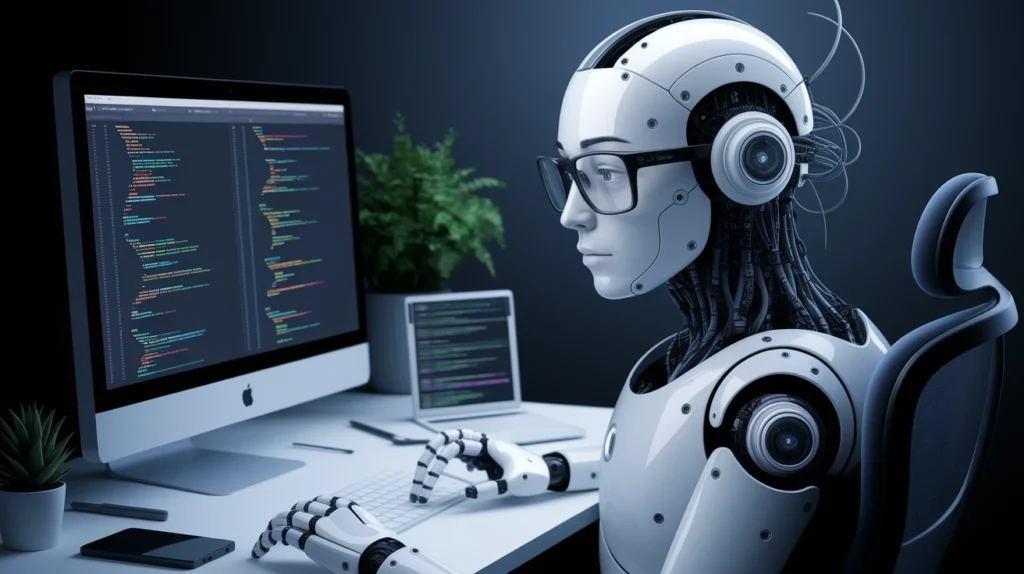
ChatGPT can be useful for programming because it can explain code, generate examples, identify potential bugs, discuss architecture, and help developers reason through technical problems. Its usefulness becomes greater when users provide clear requirements, relevant code, error messages, and expected behavior.
Modern AI coding workflows are also becoming more agentic. Instead of simply generating a code snippet, advanced AI systems can work through larger tasks, use tools, inspect files, and assist with multi-step development processes.
However, ChatGPT does not automatically make every coding decision correct. Generated code should be reviewed, tested, and evaluated for security and maintainability. Developers should avoid copying AI-generated code into important systems without understanding what it does.
For beginners, ChatGPT can be particularly valuable as an explanation partner. Instead of asking only for code, users can ask why a solution works, what each component does, and how to improve it.
ChatGPT for Research, Search, and Current Information
Traditional chatbots can struggle with questions that require current information. ChatGPT’s web-search capability addresses this limitation by allowing supported experiences to search the web and cite sources.
This can be useful for current events, recent product information, changing technology, market developments, and other topics where older knowledge may not be sufficient. Deep research can go further by conducting multi-step research and synthesizing information across multiple online sources.
Even with web access, users should evaluate sources. A citation does not automatically make every claim correct. For important research, prioritize primary sources, official documentation, academic publications, government information, and reputable organizations.
The best research workflow treats AI as a research assistant, not an unquestionable authority. AI can speed up discovery and synthesis while humans remain responsible for evaluating evidence.
ChatGPT for Images, Files, Data, and Multimodal Work
Another reason ChatGPT is competitive is its multimodal functionality. OpenAI says supported ChatGPT experiences can analyze uploaded images, diagrams, screenshots, and charts, as well as generate and edit images. Users can also upload documents and use data-analysis capabilities for structured information.
This makes ChatGPT useful for workflows that previously required several specialized tools. A user could upload a document, ask for a summary, analyze a spreadsheet, discuss the findings, and then turn the results into a clear written report.
Data analysis can also help users explore trends and visualize information. However, users should still validate important calculations and assumptions, especially when decisions depend on the results.
The broader lesson is that multimodal AI is becoming increasingly important. The best assistant is often the one that can work with the types of information you actually use.
ChatGPT Pricing and Free vs Paid Access
ChatGPT offers free access as well as paid plans. OpenAI’s current documentation lists Free, Go, Plus, Pro, Business, and Enterprise options, with different limits and capabilities.
OpenAI introduced ChatGPT Go globally in January 2026 as a lower-cost subscription with expanded access to features such as messages, file uploads, image creation, memory, and data analysis. OpenAI also describes Plus and Pro as higher-access options designed for more demanding workflows.
For many casual users, the free version may be sufficient. Someone who uses AI regularly for writing, research, images, files, or data analysis may benefit from additional access.
The important point is that more expensive does not automatically mean better for every user. Choose a plan according to actual usage rather than purchasing features you rarely need.
ChatGPT vs Other Leading AI Assistants
ChatGPT operates in a competitive AI market. Claude and Gemini, among others, offer their own advanced capabilities. Anthropic’s Claude platform has continued to develop strong coding, reasoning, agentic, and professional-work capabilities.
Google’s Gemini ecosystem also includes features for research, image and video generation, learning, connected applications, customized assistants, and multi-step tasks.
This competition is beneficial for users because it pushes companies to improve models, interfaces, integrations, reliability, and pricing. It also means that the answer to “which AI is best?” can change over time.
Rather than choosing based only on brand recognition, compare tools using your own workflow. Test the same realistic tasks across two or three platforms and evaluate accuracy, speed, writing quality, reasoning, usability, integrations, and cost.
Advantages and Disadvantages of ChatGPT
ChatGPT’s biggest advantage is versatility. It can support many different tasks without requiring users to learn a separate application for every small workflow. Its growing collection of tools also allows users to move from text to research, files, images, data, and voice within the same broader ecosystem.
Another advantage is accessibility. ChatGPT is available on the web and through mobile applications, and OpenAI offers a free tier alongside several paid options.
There are also limitations. AI can make mistakes, misunderstand instructions, or produce confident-sounding but incorrect information. OpenAI explicitly notes that ChatGPT outputs may sometimes be inaccurate or misleading.
Another potential limitation is feature availability. Tools, limits, models, and pricing can vary by subscription, region, and product updates. This means users should check current official information before making decisions based on older articles.
Common Mistakes When Choosing the “Best” AI

One common mistake is assuming that the most popular AI must be the best for every task. Popularity can indicate broad adoption, but it does not measure how well a platform matches an individual workflow.
Another mistake is focusing too heavily on benchmark scores. Benchmarks can provide useful evidence, but everyday performance also depends on context, interface design, integrations, response consistency, and the user’s ability to communicate requirements clearly.
Users also sometimes compare AI systems using unrealistic prompts. A better test is to use real tasks from your daily workflow. Give each tool the same instructions, information, and constraints, then compare the results.
Finally, avoid treating AI output as automatically authoritative. The best AI user remains involved in the process, checks important information, and understands the limitations of the technology.
Latest AI Trends and the Future of ChatGPT
AI assistants are increasingly moving from simple chat interfaces toward multimodal and agentic systems. Instead of merely responding to prompts, modern AI tools are becoming better at handling sequences of tasks, using tools, working with files, searching information, and assisting with longer workflows.
Competition is also accelerating. Anthropic has continued to develop agentic models and professional-work capabilities, while Google’s Gemini ecosystem is expanding its connections to applications and multi-step tasks.
For ChatGPT, the future will likely involve deeper integration between reasoning, search, files, images, data analysis, voice, automation, and other tools. The goal is increasingly to make AI useful as a general-purpose digital assistant rather than a simple question-answering system.
That makes the question “is ChatGPT the best AI?” less permanent than it once seemed. The AI landscape changes rapidly. A tool that leads in one period can face strong competition later. Users should therefore evaluate current capabilities instead of relying on an old ranking.
Conclusion:
So, is ChatGPT the best AI? There is no universal answer. ChatGPT is clearly one of the strongest general-purpose AI assistants available, with capabilities spanning writing, learning, coding, research, web search, images, files, data analysis, voice, and other workflows.
Its biggest strength is versatility. Instead of being designed around only one task, ChatGPT can support many different activities in a connected workflow. That makes it an excellent choice for people who want one AI assistant for multiple needs.
At the same time, competitors such as Claude and Gemini offer compelling capabilities and may be preferable for particular users or workflows.
The smartest answer is therefore simple: ChatGPT may be the best AI for you if its capabilities match your goals. Test it using real tasks, compare alternatives when necessary, verify important information, and choose based on usefulness rather than hype.
FAQs About
Is ChatGPT the best AI in 2026?
ChatGPT is one of the leading general-purpose AI assistants in 2026, but there is no objective AI that is best for every task. The right choice depends on the user’s goals, workflow, required features, and budget.
Is ChatGPT better than other AI tools?
ChatGPT can be better for some workflows, while other AI platforms may perform better for particular tasks. Claude and Gemini, for example, have developed their own strong capabilities.
Is ChatGPT free?
Yes. OpenAI provides a free ChatGPT plan, alongside paid plans with expanded access and additional capabilities. Current plan features and limits can change over time.
Is ChatGPT good for students?
ChatGPT can be useful for explanations, brainstorming, study support, and learning. Students should verify important information and follow their school’s rules regarding AI use.
Is ChatGPT good for SEO and content writing?
ChatGPT can help with brainstorming, outlining, editing, summarization, and content development. Human review remains important for accuracy, originality, search intent, and useful first-hand expertise.
Is ChatGPT accurate?
ChatGPT can provide highly useful answers, but it can also make mistakes. Important information should be verified against reliable sources, especially when accuracy matters.
Is ChatGPT better than Google Gemini?
Neither is automatically better for every user. Gemini can be particularly useful for people who want Google’s connected ecosystem and features such as connected apps and multi-step tasks, while ChatGPT offers a broad set of conversational, research, file, image, and data capabilities.
Is ChatGPT better than Claude?
It depends on the task. Claude has developed strong capabilities in coding, agentic workflows, and professional knowledge work, while ChatGPT offers a broad multimodal assistant ecosystem.
What makes ChatGPT different from a basic chatbot?
ChatGPT combines conversational AI with additional tools and capabilities. Depending on the user’s plan and available features, it can work with web search, files, images, data analysis, voice, memory, and other tools.
Should I use only one AI tool?
Not necessarily. Many users can benefit from having a primary AI assistant and occasionally testing alternatives. The best approach is to use the tool that produces reliable results for the specific task you are completing.