Search is changing quickly, and traditional keyword rankings no longer tell the whole SEO story. With Google AI Mode, users can ask detailed questions, continue conversations, and receive AI-generated responses supported by links to web sources. Google explains that AI Mode can break a question into related subtopics and search for them simultaneously, creating a more comprehensive response.
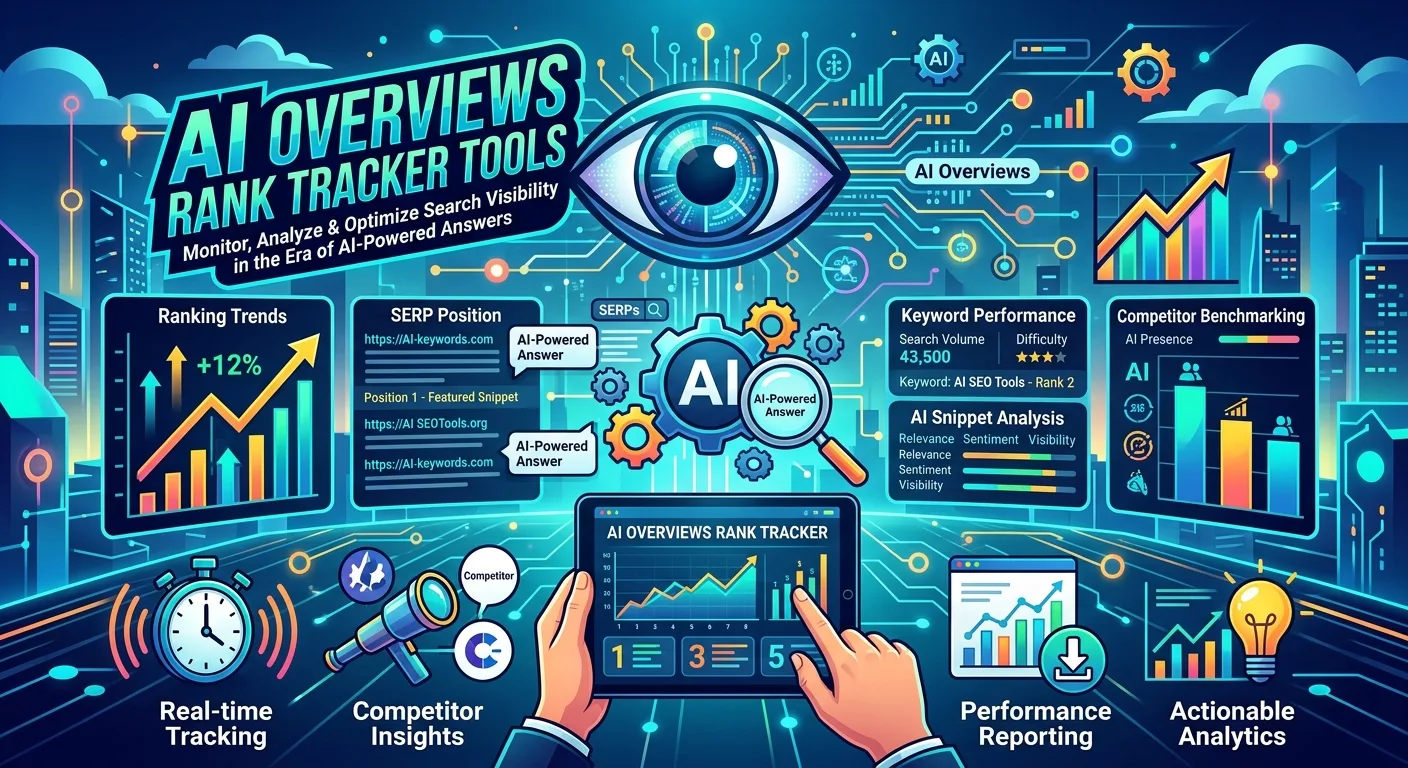
An AI mode rank tracking tool helps marketers understand how their websites and brands appear within this evolving search environment. Instead of checking hundreds of searches manually, these tools can monitor AI visibility, mentions, citations, prompts, competitors, and related search performance.
For businesses and content creators, this creates new opportunities to improve productivity, automation, efficiency, creativity, and content strategy. The goal is not simply to track a number. It is to understand where your brand appears, which pages receive visibility, and how your content can become a useful source for AI-powered search.
What Is an AI Mode Rank Tracking Tool?
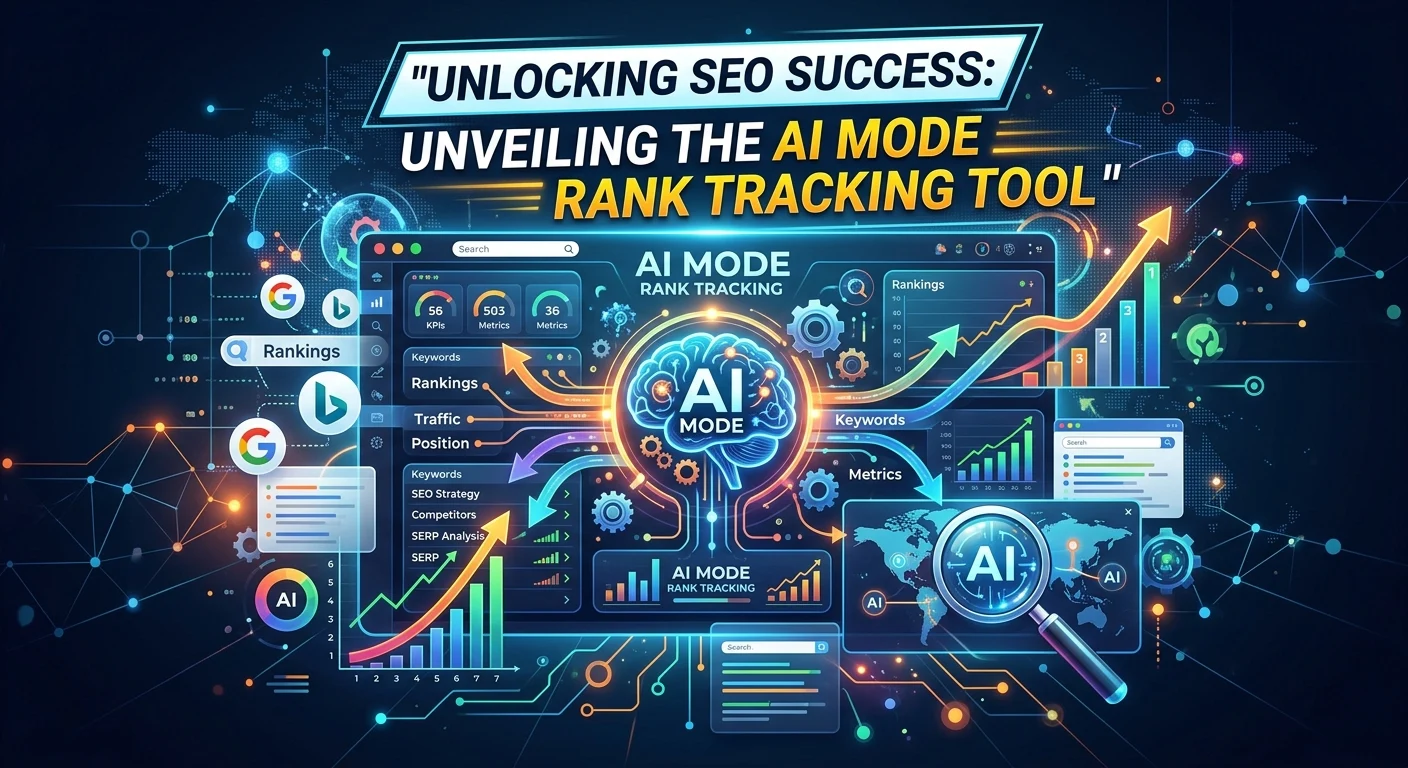
An AI mode rank tracking tool is an SEO monitoring solution designed to measure how a website, brand, or content appears in AI-powered search experiences such as Google AI Mode. Depending on the platform, it may track AI mentions, citations, prompts, visibility, competitors, and traditional search rankings.
Traditional rank tracking usually focuses on a keyword and a position. For example, a website might rank #3 for a particular search query. AI Mode works differently because its response can contain several web sources and can change as users ask follow-up questions.
Google states that AI Mode provides AI-powered responses with links to web resources and uses a query fan-out approach that divides a question into subtopics and searches for them simultaneously. This makes AI visibility more complex than simply recording one fixed ranking.
A modern tracking tool therefore helps answer questions such as “Is my brand appearing in AI Mode?”, “Which pages are being surfaced?” and “Which competitors appear for the same topics?”
How AI Mode Rank Tracking Works
An AI rank tracking workflow normally begins with a list of important keywords, questions, or prompts. The tracking system then monitors those searches and records relevant visibility signals.
For example, a website selling SEO software might monitor questions such as “best SEO tools for small businesses” or “how to track AI search visibility.” The system can then identify whether the brand or its content appears in the resulting AI experience.
A simplified process looks like this:
Select important queries → monitor AI search results → identify mentions and citations → compare competitors → analyze trends → improve content.
Google’s Search Console also provides useful first-party information. Its Generative AI performance report includes impressions from AI Overviews and AI Mode, along with dimensions such as pages, countries, and devices.
The important point is that AI tracking should be viewed as trend monitoring, not simply as a replacement for traditional ranking reports.
Key Features of an AI Mode Rank Tracking Tool
A useful AI search tracking platform should provide features that help you understand more than traditional keyword positions. AI visibility, prompt monitoring, citations, mentions, competitor analysis, historical data, and reporting are among the most useful capabilities.
Prompt tracking is particularly important. Instead of monitoring only short keywords, marketers can track complete questions that resemble the way people interact with AI search.
Competitor monitoring can show which brands appear frequently for important topics. Citation analysis can reveal which pages and domains AI systems use as sources.
Some platforms now offer broader AI visibility tracking. For example, Ahrefs describes Brand Radar as a system for monitoring brand visibility across AI search and benchmarking visibility against competitors.
Benefits of Using an AI Mode Rank Tracking Tool
The biggest benefit is visibility into a new type of search behavior. Traditional rankings can show where your page appears in conventional results, but AI search adds another layer of discovery.
Automation can also save considerable time. Instead of repeatedly entering the same questions into search engines, a tracking platform can organize large sets of queries and help identify meaningful changes.
Another benefit is competitive research. Suppose your website covers a topic extensively but another website repeatedly appears as an AI source. That result can encourage you to investigate content depth, authority, structure, freshness, and external references.
AI visibility tracking can also improve reporting. Agencies can combine traditional rankings with AI visibility metrics to give clients a broader picture of how their content performs across changing search experiences.
AI Mode Rank Tracking vs Traditional SEO Rank Tracking
Traditional SEO tracking normally measures keyword position, search visibility, SERP features, impressions, and clicks.
AI Mode tracking focuses on a different set of signals. These may include whether a brand appears in an AI response, whether its pages receive citations, how frequently it appears for tracked prompts, and how competitors perform.
Google’s Search Console documentation explains that AI Mode uses standard impression and click concepts, while position follows the methodology used for Google Search results. It also notes that a follow-up question in AI Mode counts as a new query.
This means marketers should not automatically abandon traditional SEO metrics. Instead, use traditional ranking data and AI visibility data together.
A healthy SEO dashboard can therefore include organic rankings, clicks, impressions, conversions, AI Mode impressions, AI visibility, citations, and relevant competitor signals.
Main Use Cases for AI Mode Rank Tracking
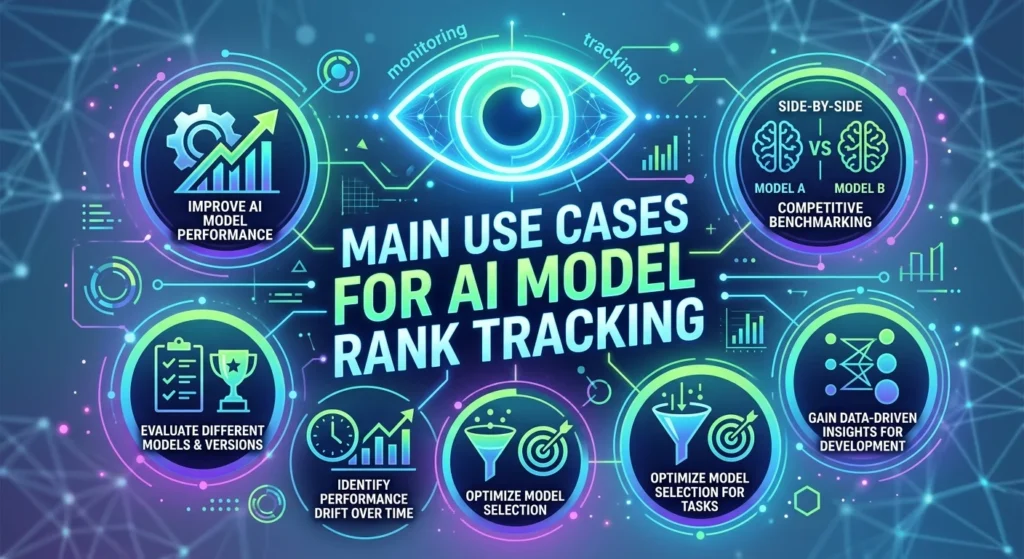
Content teams can use AI tracking to identify questions where competitors receive visibility but their own websites do not. This can reveal opportunities for better explanations, deeper topic coverage, or updated information.
Businesses can also use it for brand monitoring. For example, a software company can monitor how its brand appears when users ask about product categories, alternatives, comparisons, or recommendations.
Ecommerce websites can monitor product-related searches. These might include buying guides, comparisons, specifications, product categories, and questions about features.
Agencies can use AI visibility data in client reporting. A monthly report can show traditional keyword performance alongside AI search visibility and competitor activity.
The same information can support editorial planning. If important questions consistently generate AI answers but your website lacks a strong page addressing those questions, that gap can become a content opportunity.
Free vs Paid AI Mode Rank Tracking Tools
Free tracking is useful for learning and basic monitoring, while paid platforms generally provide more automation, data, and reporting capacity.
Google Search Console is an important free source of first-party information. Google says its Generative AI performance report is available worldwide as of August 31, 2026, and includes impressions from AI Overviews and AI Mode.
Free third-party tools can also provide limited visibility checks. For example, Ahrefs currently offers a free AI visibility checker that can examine brand visibility across several AI search experiences.
Paid platforms can provide broader prompt databases, historical tracking, competitor comparisons, scheduled reporting, custom prompts, and additional AI platforms.
For a small website, start with the free data you can access. Upgrade when you need larger-scale monitoring, automation, historical analysis, or agency-level reporting.
Pricing and Cost Factors to Consider
Pricing differs widely because AI tracking tools use different models. Some include AI visibility features within a broader SEO subscription. Others provide dedicated AI tracking products.
Before purchasing, look beyond the monthly price. Consider the number of websites, tracked queries, custom prompts, competitors, locations, reports, and historical records included in the plan.
Custom prompt limits can matter significantly. If you need to monitor hundreds of specific questions, a plan with a low prompt allowance may become restrictive.
Also examine update frequency. A system that refreshes data infrequently may provide less useful information than one designed for regular monitoring.
The best purchasing decision depends on your website size, SEO objectives, reporting needs, and monitoring volume, rather than simply choosing the cheapest or most expensive option.
Integrations and Reporting Capabilities
Integrations can make AI search tracking much more useful. Connecting data with SEO analytics, reporting platforms, spreadsheets, APIs, or Search Console can reduce manual work.
Google Search Console is especially valuable because it provides first-party information about your website’s performance in Google Search. Its generative AI report can show which pages receive impressions in AI features and where those impressions originate.
A useful reporting system should allow you to segment data by page, query, country, device, topic, and time period where supported.
Agencies can benefit from automated reports that combine AI search metrics with conventional SEO information. This makes it easier to explain changes to clients without relying on isolated screenshots.
When evaluating integrations, look for CSV exports, APIs, scheduled reports, Search Console connections, analytics support, and flexible dashboards.
How to Choose the Right AI Mode Tracking Tool
Start by defining exactly what you want to measure. If Google AI Mode is your primary concern, make sure the tool specifically supports AI Mode rather than only general AI visibility.
Next, examine prompt support. A good platform should allow you to monitor questions that are genuinely relevant to your customers.
Competitor tracking is another important factor. Look for systems that allow you to compare your visibility with relevant competitors without reducing the analysis to an oversimplified score.
Check the tool’s methodology as well. You should understand how it collects results, how it defines an AI mention or citation, how often it updates data, and whether its metrics represent observed results or modeled estimates.
A practical evaluation checklist includes:
- AI Mode coverage
- AI Overview tracking
- Prompt monitoring
- Brand mention tracking
- Citation analysis
- Competitor comparison
- Historical data
- Location support
- Custom reporting
- Data exports
- API availability
- Transparent methodology
AI Mode Rank Tracking Alternatives
You do not necessarily need one platform to measure every aspect of AI search. Several complementary methods can provide useful information.
Google Search Console is an important alternative for Google-specific performance measurement. Its generative AI report directly covers AI Overviews and AI Mode.
Traditional SEO rank trackers remain useful because organic rankings still provide valuable information about search performance. AI visibility should complement, rather than automatically replace, conventional SEO measurement.
Manual searches can also provide qualitative insight. Search your most important questions and examine which websites appear as sources, what information the AI response emphasizes, and whether your content appears.
For broader AI search research, dedicated visibility platforms can monitor multiple environments. Ahrefs, for example, describes its AI visibility products as covering Google AI features along with other AI platforms.
The strongest workflow combines first-party search data, traditional SEO tracking, AI visibility measurement, and human analysis.
Best Practices for Improving AI Mode Visibility

Tracking only becomes valuable when you use the findings to improve your website.
Start by identifying important questions where your competitors receive AI visibility but your site does not. Examine what users actually want and whether your content provides a direct, complete answer.
Use clear headings and place important answers where readers can find them easily. Add practical examples, original research, expert explanations, relevant data, and trustworthy references where appropriate.
Freshness also matters for topics that change quickly. Review pages when facts, products, regulations, software features, or industry practices change.
Ahrefs’ current AI Mode tracking guidance highlights several practical areas, including leading with direct answers, keeping content fresh, building long-tail topic coverage, and developing genuine visibility across web communities.
Most importantly, write for people first. Do not create unnatural content simply because you believe an AI system might extract it.
Common AI Mode Tracking Mistakes
One common mistake is assuming that AI visibility works exactly like a traditional ranking. AI-generated responses can contain multiple sources and can change as the search experience develops.
Another mistake is tracking too many unrelated prompts. More data does not always mean better information. Focus on queries connected to your audience, products, services, and business goals.
Marketers can also misinterpret a mention. Being mentioned does not automatically mean that the mention is positive, prominent, or commercially valuable. Always examine the context.
Another problem is relying on one observation. Search results can change, so historical trends are more useful than isolated checks.
Finally, do not optimize exclusively for AI systems. A page that looks optimized for machines but provides little value to readers will struggle to create sustainable results.
AI Mode Rank Tracking Trends in 2026
AI search has moved from an experimental concept toward a significant part of the search experience. Google describes AI Mode as a conversational search experience where users can ask complex questions, continue with follow-ups, and explore information from multiple web sources.
One important development in 2026 is stronger first-party measurement. Google says its Generative AI performance report rolled out worldwide on August 31, 2026, and includes impressions from AI Overviews and AI Mode.
Google has also introduced a Search generative AI control that lets site owners manage inclusion in generative AI features such as AI Overviews and AI Mode. Google says this control became available worldwide on August 31, 2026.
The SEO industry is therefore moving toward broader concepts such as AI visibility, answer engine optimization, citations, brand mentions, prompt coverage, and AI share of voice.
Future of AI Mode Rank Tracking
The future of AI Mode tracking will likely involve more sophisticated measurements than a single keyword position.
Instead of asking only where a page ranks, marketers will increasingly ask whether their brand appears across relevant questions, which pages receive citations, which competitors dominate specific topics, and how visibility changes over time.
Automation will become increasingly important. Tracking systems can already organize large prompt sets and identify visibility gaps. Future systems may connect these findings directly to content workflows, technical SEO analysis, competitor research, and reporting.
Another likely development is broader cross-platform measurement. Businesses may want one dashboard covering Google AI Mode, AI Overviews, conversational AI tools, and other emerging search experiences.
The most sustainable strategy will remain useful content, strong technical foundations, topical expertise, trustworthy information, and continuous measurement. Tools can identify opportunities, but human judgment remains important when deciding how to improve a website.
Conclusion
An AI mode rank tracking tool helps SEO professionals understand how their websites and brands appear in Google’s evolving AI search environment. It adds a new measurement layer alongside traditional rankings, clicks, impressions, and conversions.
The most useful tracking strategy combines AI Mode monitoring, AI Overview data, prompt tracking, citations, brand mentions, competitor research, and Google Search Console insights.
You do not need to start with an expensive platform. Begin with the most important questions for your audience and monitor how your website performs. Use the data to identify content gaps and improve pages with genuine value.
As AI search continues to evolve, successful SEO will require more than chasing traditional positions. Businesses need to understand how search answers questions, which sources receive visibility, and how users discover information through AI-powered experiences.
Frequently Asked Questions
What is an AI mode rank tracking tool?
An AI mode rank tracking tool monitors how websites and brands appear in AI-powered search experiences. Depending on the platform, it may track AI visibility, prompts, mentions, citations, competitors, and traditional rankings.
Can AI Mode be tracked in Google Search Console?
Yes. Google’s Generative AI performance report includes impressions from AI Overviews and AI Mode. It can also provide dimensions such as pages, countries, devices, and date ranges.
Is AI Mode ranking the same as normal Google ranking?
Not necessarily. AI Mode can generate responses containing multiple web sources and can handle follow-up questions. Google explains that each follow-up question in AI Mode is treated as a new query for Search Console measurement.
What should an AI Mode rank tracking tool measure?
Useful metrics can include AI visibility, brand mentions, citations, tracked prompts, competitor presence, AI impressions, traditional rankings, clicks, and historical trends.
Are AI Mode tracking tools free?
Some basic monitoring options are free or included with existing services. More advanced platforms may charge for larger datasets, custom prompts, competitor analysis, automation, and historical tracking.
How often should AI Mode visibility be monitored?
Important websites should monitor visibility regularly rather than relying on occasional manual searches. However, avoid making major strategic decisions from a single observation.
Can AI Mode tracking help improve SEO?
Yes, indirectly. Tracking provides data about visibility gaps, competitor presence, citations, and important search questions. SEO teams can use those findings to improve content and topic coverage.
Why are citations important in AI search?
Citations show which web sources are being used to support or expand an AI-generated response. Monitoring citations can help marketers understand which pages and domains receive visibility for relevant topics.
Should I stop traditional keyword tracking?
No. Traditional rankings, clicks, impressions, and conversions remain valuable. AI visibility tracking should complement traditional SEO measurement rather than automatically replace it.
What is the future of AI Mode rank tracking?
The industry is moving toward broader AI visibility measurement, including prompt coverage, citations, brand mentions, competitor benchmarking, and cross-platform search monitoring. The exact metrics will continue to evolve as AI search develops.