AI-powered search is changing how people discover websites, products, brands, and answers. Traditional SEO still matters, but marketers now need to understand how their content appears inside Google AI Mode, AI Overviews, and other generative search experiences. This is where AI mode rank tracker tools become useful.
These tools help SEO professionals monitor visibility, keywords, competitors, citations, and changes in AI-generated search results. Instead of checking search pages manually every day, marketers can automate much of the monitoring process. That saves time and makes SEO reporting more efficient.
Google has continued expanding AI Mode in 2026, while its Search Console now includes a Generative AI performance report covering AI Overviews and AI Mode.
Whether you manage a small website, ecommerce store, agency, or content business, AI search tracking can help you understand where your brand appears, where competitors appear, and which topics deserve more attention.
What Are AI Mode Rank Tracker Tools?
AI mode rank tracker tools are SEO platforms or monitoring systems designed to measure website or brand visibility in AI-powered search experiences. They can monitor traditional keyword rankings alongside AI-generated results, citations, mentions, and other visibility signals.
Traditional rank trackers usually focus on positions such as #1, #5, or #10 in a search engine results page. AI Mode works differently. An AI-generated response can contain several sources, follow-up answers, and dynamically selected links rather than one fixed ranking position.
Because of this difference, modern tracking platforms increasingly use measurements such as AI visibility, citations, mentions, share of voice, prompt coverage, and AI Overview presence. Ahrefs, for example, distinguishes traditional ranking measurement from AI visibility tracking because AI answers can change between sessions.
For marketers, the important question is no longer only, “What position does my keyword have?” It is also, “Does my website appear when AI search answers questions related to my business?”
How AI Mode Rank Tracking Works
AI search tracking generally starts with a collection of keywords, questions, or prompts. The tool monitors those queries and records whether an AI-generated search feature appears and whether a tracked website or brand is mentioned or cited.
A simple workflow looks like this:
Choose target topics → collect keywords and prompts → monitor AI search results → identify mentions or citations → compare competitors → analyze changes → improve content.
Some tools focus on Google AI features, while others monitor multiple AI platforms. Ahrefs, for example, currently describes Brand Radar as tracking visibility across AI Overviews, AI Mode, ChatGPT, Perplexity, Microsoft Copilot, and Gemini.
The data should not be treated exactly like traditional rankings. AI-generated answers can change based on the query, context, location, device, model, and other factors. Therefore, trend data is generally more useful than a single snapshot.
Key Features to Look for in AI Search Rank Trackers
A good AI search tracking platform should provide more than a simple keyword position. Look for features that help you understand visibility, citations, competitors, prompts, and changes over time.
Useful features include AI Overview monitoring, AI Mode tracking, prompt tracking, brand mentions, citation monitoring, competitor comparison, location tracking, historical data, alerts, reporting, and keyword segmentation.
Traditional SEO capabilities can also remain valuable. For example, Ahrefs Rank Tracker supports mobile and desktop tracking, location tracking, and numerous SERP features, including AI Overviews.
Another important feature is customization. A business selling software may want to track questions such as “best project management software,” while a local business may need location-specific searches. The best workflow depends on the website’s audience and search intent.
Benefits of Using AI Mode Rank Tracker Tools
The biggest benefit is visibility into a search environment that traditional rank tracking may not fully explain. A website can maintain strong organic rankings while receiving different exposure in AI-generated answers.
Automation is another major advantage. Instead of manually searching hundreds of questions, a tracking platform can organize results and highlight changes. This makes it easier to spend time on strategy rather than repetitive checking.
AI search tracking can also support competitive research. If competitors appear repeatedly for important questions while your website does not, that can reveal content, authority, or topic-coverage opportunities.
For agencies, these tools can improve client reporting. Instead of reporting only traditional rankings, an SEO report can include organic visibility, AI search presence, citations, brand mentions, and changes over time.
AI Mode vs Traditional Rank Tracking
Traditional rank tracking normally answers a relatively straightforward question: Where does this page rank for a particular keyword?
AI search introduces a different measurement problem. An AI response may cite several websites, and the sources can change from one observation to another. There may not be a stable position equivalent to the traditional #1 ranking.
That means SEO teams should use both approaches rather than automatically replacing traditional tracking.
Traditional tracking remains useful for measuring organic positions, SERP features, traffic opportunities, and keyword movement. AI visibility tracking adds another layer by showing whether a brand or website appears in generative search experiences.
Google’s own Search Console has made this distinction more practical in 2026. Its Generative AI performance report includes impressions from AI Overviews and AI Mode, allowing site owners to analyze performance within Google’s generative search features.
Best Use Cases for AI Mode Rank Tracking
AI search trackers can support many SEO workflows. One common use case is content optimization. A writer can identify questions where competitors receive AI citations and then examine whether their own content adequately answers those questions.
Another use case is brand monitoring. Companies can track whether AI-generated answers mention their brand when users search for products, services, comparisons, or industry information.
Ecommerce businesses can monitor product-related questions. For example, a retailer might track searches around product categories, buying guides, specifications, and alternatives.
Agencies can use AI visibility tracking for client campaigns. A monthly report could show changes in traditional rankings alongside AI search visibility, citation trends, and competitor presence.
It can also help publishers discover content gaps. If AI systems frequently answer a topic but rarely reference your website, that may indicate an opportunity to improve the depth, clarity, originality, or authority of your content.
Free vs Paid AI Mode Rank Tracker Tools
Free tools are useful for learning and occasional checks, while paid platforms are generally more suitable for ongoing monitoring and larger SEO campaigns.
Free options can include limited AI visibility reports, Search Console data, or restricted tracking features. Google Search Console is especially useful because its Generative AI performance report provides first-party data about impressions from AI Overviews and AI Mode.
Paid SEO platforms often provide larger keyword databases, competitor tracking, historical data, scheduled reports, location filters, integrations, and automated monitoring.
The right choice depends on your website size and goals. A small website with a few important topics may not need an expensive platform. A large agency managing many domains may need more automation and reporting capacity.
Before paying, check tracked keywords, prompt limits, AI platforms covered, update frequency, locations, historical data, export options, and team access.
Pricing and Cost Considerations
AI search tracking pricing varies significantly between platforms. Some products include AI tracking inside a broader SEO subscription, while others sell dedicated AI visibility features.
For example, Ahrefs currently offers AI visibility capabilities through Brand Radar, with different plans and usage levels. Its public product information lists separate pricing for platform access and custom prompt usage.
However, price should not be the only consideration. A cheaper tool that provides little useful data may cost more in wasted time than a platform that gives clear insights.
Before choosing a subscription, calculate how many websites, keywords, prompts, locations, competitors, and reports you actually need.
For a small project, start with first-party Google data and limited free tracking where available. Upgrade only when you need more automation, competitor analysis, historical visibility data, or broader AI-platform coverage.
Important Integrations for AI Search Tracking
Integrations can make AI search tracking much more useful. A tracker may connect with analytics, SEO platforms, reporting systems, spreadsheets, APIs, or other marketing tools.
Google Search Console is particularly important because it provides direct performance data for your website in Google Search. In 2026, its generative AI report can show AI-related impressions, pages receiving those impressions, and dimensions such as device and country.
SEO platforms can complement this information with keyword rankings, SERP features, competitor data, and content research.
For agencies, reporting integrations can reduce repetitive work. Data can be combined into a regular dashboard showing traditional SEO and AI search visibility in one place.
When evaluating a platform, check whether it supports CSV exports, APIs, analytics connections, Search Console data, automated reports, and team workflows.
How to Choose the Right AI Mode Rank Tracker
Start with your actual SEO goal instead of choosing a tool because it has the largest feature list.
If your primary goal is Google visibility, look for strong AI Overview and AI Mode monitoring. If your strategy covers multiple AI assistants, choose a platform that tracks several generative search environments.
Location support also matters. Search results can differ by country, city, language, or device. A business targeting one market should avoid relying entirely on global averages.
Check the quality of the underlying data as well. Ask how the platform collects prompts, how frequently results refresh, how it defines a mention or citation, and whether its visibility metrics are measured or modeled.
A useful checklist is:
- AI Mode coverage
- AI Overview tracking
- Prompt monitoring
- Brand mentions
- Citation tracking
- Competitor analysis
- Historical data
- Location targeting
- Reporting and exports
- API or integrations
- Transparent methodology
AI Mode Rank Tracker Tools and Alternatives
AI tracking software is only one part of an SEO measurement system. You can combine it with several alternatives and supporting tools.
Google Search Console provides first-party performance information for Google Search. Its 2026 generative AI report is especially relevant because it includes AI Overviews and AI Mode.
Traditional rank trackers remain useful for monitoring organic keyword positions and SERP features. Ahrefs Rank Tracker, for example, includes AI Overviews among the SERP features it can monitor.
Manual AI search checks can also provide qualitative information. Search important questions yourself and examine which sources appear, what information the AI system emphasizes, and whether your competitors receive citations.
The strongest approach is usually a combination of first-party search data, traditional SEO tracking, AI visibility monitoring, content analysis, and human review.
How to Improve Your AI Search Visibility
Tracking alone does not improve visibility. You need to turn the data into content and SEO actions.
Start by finding important questions where competitors receive visibility but your website does not. Then examine the search intent and determine whether your existing content gives a direct, accurate, and useful answer.
Make important information easy to understand. Use descriptive headings, concise explanations, relevant examples, original research, clear definitions, and trustworthy sources.
Do not write content only to manipulate AI systems. Focus on creating pages that genuinely help readers. Google’s ongoing AI Search updates emphasize access to useful web content and original sources.
Also build topical depth. Instead of publishing one article for every minor keyword variation, create useful topic clusters that answer related questions naturally.
Common AI Rank Tracking Mistakes
One common mistake is treating AI visibility exactly like traditional Google rankings. AI-generated answers do not always behave like fixed SERP positions, so a single observation can be misleading.
Another mistake is tracking too many irrelevant prompts. A huge list of questions does not automatically create useful insight. Focus on queries connected to your audience, products, services, and business goals.
Some marketers also focus only on mentions. A brand mention may be positive, neutral, or incomplete. Review the actual context instead of treating every appearance as equal.
Finally, avoid making decisions from one day’s data. AI-generated results can change frequently. Ahrefs notes that its research found substantial volatility in AI Overviews between observations, which reinforces the value of repeated monitoring.
Latest AI Search Tracking Trends in 2026
The biggest trend is the movement from keyword rankings toward broader AI visibility measurement. Search is increasingly becoming conversational, and users can ask longer and more complex questions.
Google reported in 2026 that AI Mode had surpassed one billion monthly users globally, while AI Mode queries had more than doubled each quarter since launch.
Another important development is stronger first-party measurement. As of August 31, 2026, Google said its Generative AI performance report had rolled out worldwide and included impressions from AI Overviews and AI Mode.
AI search is also becoming more multimodal and conversational. Google has described updates that connect AI Overviews and AI Mode more closely and make it easier to explore websites and original content.
For SEO professionals, this means the measurement model is expanding. Rankings still matter, but visibility, citations, brand mentions, topic coverage, and user intent are becoming increasingly important parts of search strategy.
Future of AI Mode Rank Tracking
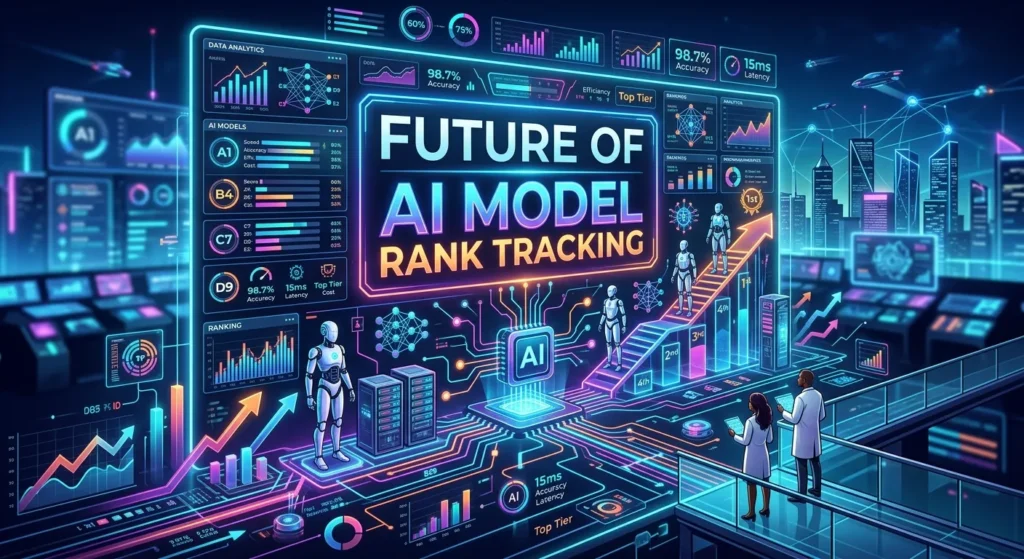
The future of AI search tracking will likely focus less on a single ranking number and more on visibility across complete search journeys.
Tracking platforms are already moving toward prompt-level monitoring, competitor benchmarking, AI citations, and cross-platform visibility. Ahrefs, for example, describes custom prompt tracking and AI visibility benchmarking across several AI platforms.
More advanced systems may combine search rankings, AI citations, brand mentions, traffic, conversions, content quality, and competitor activity into one workflow.
Automation will also become more important. Instead of simply reporting that visibility changed, future systems can help identify the pages, topics, prompts, and competitors associated with the change.
For marketers, the practical lesson is simple: build a measurement system that can adapt as AI search evolves. Avoid depending on one metric or one platform.
The most sustainable strategy remains useful content, strong technical SEO, trustworthy information, clear answers, original value, and consistent measurement.
Conclusion
AI mode rank tracker tools are becoming an important part of modern SEO because search is becoming more conversational and AI-driven. Traditional keyword rankings still provide valuable information, but they do not tell the entire story when search engines generate answers and select sources dynamically.
A strong AI search tracking strategy combines traditional rankings with AI Mode visibility, AI Overview presence, citations, brand mentions, competitor monitoring, prompt tracking, and first-party Search Console data.
For beginners, start small. Track the questions that matter most to your audience. Review the results regularly and improve the pages that have genuine opportunities to provide better answers.
For advanced SEO teams, combine multiple data sources and measure trends over time. The goal is not simply to appear in an AI response. The goal is to create useful, trustworthy content that search systems can understand and users can benefit from.
Frequently Asked Questions
What are AI mode rank tracker tools?
AI mode rank tracker tools monitor website or brand visibility in AI-powered search experiences. Depending on the platform, they can track AI Mode, AI Overviews, mentions, citations, prompts, competitors, and related SEO signals.
Can traditional rank trackers track AI Mode?
Some traditional SEO platforms are adding AI search features, but AI Mode does not behave exactly like a traditional ranking page. Modern tools may therefore report visibility, citations, or mentions instead of only a fixed ranking position.
Is Google Search Console useful for AI Mode tracking?
Yes. Google’s Generative AI performance report includes data from AI Overviews and AI Mode and can show impressions, pages, devices, countries, and other dimensions.
Are AI rank tracking tools free?
Some tools offer free or limited features. Paid platforms generally provide more tracking capacity, historical information, competitor analysis, automation, and reporting features.
What should I track besides AI rankings?
Track AI mentions, citations, prompt visibility, competitor presence, traditional organic rankings, impressions, clicks, conversions, and important content changes.
How often should I check AI search visibility?
For important campaigns, regular monitoring is more useful than occasional manual checks. AI-generated results can change, so use historical trends rather than making major decisions from one observation.
Can AI search tracking improve SEO?
Tracking itself does not improve SEO. It provides information that can guide content updates, topic research, competitor analysis, and optimization decisions.
Why are citations important in AI search?
Citations can show which websites an AI-generated answer uses as supporting sources. Monitoring them can help you understand what content and sources are receiving visibility for relevant questions.
Should small websites use AI rank tracking?
Small websites can benefit from basic monitoring, but they do not necessarily need an expensive platform. Start with important keywords, questions, and Google Search Console data, then expand tracking as the website grows.
What is the future of AI mode rank tracking?
The industry is moving toward broader AI visibility measurement, including prompt tracking, citations, brand mentions, competitor benchmarking, and cross-platform monitoring rather than relying only on traditional keyword positions.